Bueno
Banned
Man, I should REALLY make a tutorial outta this.
First of all, you NEED oil clay. I can't stress this enough. Oil clay can stay moist for a very long time as long as you put it in a plastic bag before and after you use it as well as make sure the bag is closed whenever. Doesn't matter what kind of bag. It can even be a supermarket bag. And keep the clay at room temperature or warmer.
Second, KNEAD the clay before you use it. This gets the air pockets out of the clay and makes it more warmer and soft for when you start sculpting. For a video of Kneading clay, go here because I can't Knead clay worth ****.:disappoin
Third, when the clay is ready I usually make flat square slabs out of them (using a pin roller for dough or whatever I can find) and stick them around the manakin head. Since these slabs are already flat, half of my work is done for me. At least in terms of the basic shape for the helmet. But for when I still need to smooth out surfaces, I use my good ol' palms fingers or some...

...tools!

In sculpting terms, smoothing at times is known as Raking. This tool that I have in my hand is good for small to medium areas while this next one...
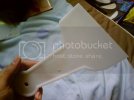
...is good for larger areas. I then go over the raked areas with my palms to make it smoothed out and softened.

For specific detailing, there's many kinds of tools. I use the sharp pointy right end of this one in particular for things such as eyes and tiny hard-to-reach corners while the left end is used for smoothing out those corners, etc.
And most importantly, SCULPTING TAKES TIME! It doesn't matter what you make, but you need to take your time and NOT rush it. The more you do it, the more easier it becomes. But at the same time, don't get intimidated by this. I only started a week ago and I had so much fun doin' this that the hours I spent on this sculpt felt like minutes. Just be sure to have lots of reference pics and plan how you're gonna sculpt in steps. Trust me, once you get started, you're not gonna want to stop.
To get a basic idea, check these masters out:
John Brown
Philippe Faraut
First of all, you NEED oil clay. I can't stress this enough. Oil clay can stay moist for a very long time as long as you put it in a plastic bag before and after you use it as well as make sure the bag is closed whenever. Doesn't matter what kind of bag. It can even be a supermarket bag. And keep the clay at room temperature or warmer.
Second, KNEAD the clay before you use it. This gets the air pockets out of the clay and makes it more warmer and soft for when you start sculpting. For a video of Kneading clay, go here because I can't Knead clay worth ****.:disappoin
Third, when the clay is ready I usually make flat square slabs out of them (using a pin roller for dough or whatever I can find) and stick them around the manakin head. Since these slabs are already flat, half of my work is done for me. At least in terms of the basic shape for the helmet. But for when I still need to smooth out surfaces, I use my good ol' palms fingers or some...
...tools!
In sculpting terms, smoothing at times is known as Raking. This tool that I have in my hand is good for small to medium areas while this next one...
...is good for larger areas. I then go over the raked areas with my palms to make it smoothed out and softened.
For specific detailing, there's many kinds of tools. I use the sharp pointy right end of this one in particular for things such as eyes and tiny hard-to-reach corners while the left end is used for smoothing out those corners, etc.
And most importantly, SCULPTING TAKES TIME! It doesn't matter what you make, but you need to take your time and NOT rush it. The more you do it, the more easier it becomes. But at the same time, don't get intimidated by this. I only started a week ago and I had so much fun doin' this that the hours I spent on this sculpt felt like minutes. Just be sure to have lots of reference pics and plan how you're gonna sculpt in steps. Trust me, once you get started, you're not gonna want to stop.
To get a basic idea, check these masters out:
John Brown
Philippe Faraut