

With the exception of maybe Poké Mart, corporations in video games have a well-earned reputation for being evil. In Sunset Overdrive, it’s FizzCo’s new energy drink OverCharge Delirium XT that’s responsible for the game’s mindless mutants. Umbrella’s bioweapons-to-the-highest-bidder tactics become the basis for the Resident Evil series, and Fallout’s Vault-Tec provide safety from total atomic annihilation at the low, low price of being a human test subject for twisted social experiments. And if you see this ending up anywhere other than the inevitable conclusion that “art imitates life,” you clearly haven’t been paying enough attention to the world lately.
To be fair, no real-world corporations have triggered atomic war or a zombie apocalypse. But announcing thousands of layoffs right at the start of the holiday season in favor of artificial intelligence or forcing aggressive propaganda into the eyeballs of its fanbase sits firmly in the “evil” category, or at the bare minimum callous and unfeeling. It’s clear to see what matters to the heads of big corporations when they do terrible things in the name of profit, but sometimes it’s just as telling when they don’t do something.
Microsoft, creators of the Xbox, was once top dog amongst the Big Three console makers. The original Xbox and the follow-up, the Xbox 360, smacked it out of the park, often being seen as the “true gamer’s console” next to the more well-rounded Sony offerings and the family-friendly Nintendo console. Unfortunately, the launch of the Xbox One was the gaming equivalent of Sideshow Bob stepping on every rake available, and much of that generation was spent doing damage control. It seems, however, that whatever gamer goodwill Microsoft still has in the bank the fat cats at the top seem more than willing to shove in a proverbial shredder for a few dollars more.
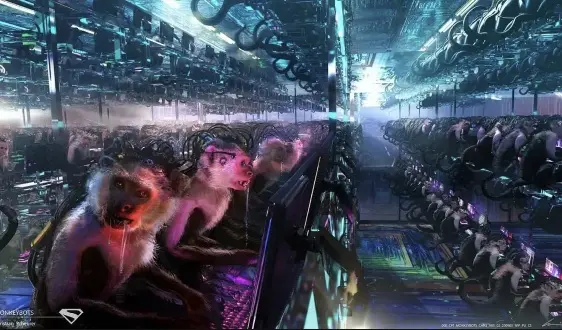
Xbox’s latest nefarious deed was the announcement that tentpole franchise Halo would make its way over to Sony’s competing console, the PS5. While the debate still rages on whether this is a net positive or negative, it did put the largely-quiet series back into the zeitgeist for a moment. It also caught the attention of Lex Luthor’s terminally-online hatemonkeys currently employed by the Trump administration.
The current administration’s social media team, made up of trolls so disgusting 4chan would ask them to dial it back, has leaned into AI slop as well as the president’s juvenile sense of humor, and posted an image of Trump as Master Chief in front of the White House (minus the desecration of the East Wing) and an American-ish flag with only forty stars, not fifty. A few days later, the Department of Homeland Security also used Halo imagery to promote recruitment for Immigration and Customs Enforcement (ICE), telling people to “destroy the Flood” and “finish the fight.”
Power to the Players https://t.co/GqNu0qdgmw pic.twitter.com/4Hw6G7i7aW
— The White House (@WhiteHouse) October 27, 2025
Finishing this fight. pic.twitter.com/6Ezq9NUqMq
— Homeland Security (@DHSgov) October 27, 2025
The metaphor was not in the least subtle – the Flood referenced by the AI slop is one of the opposing forces in the Halo series, creatures referred to by the original devs as space parasites.
As usual, the cruelty is the point.
But for a moment, let’s set aside the clear psychological damage the majority of the administration has, and let’s also set aside the likelihood of Master Chief punching Trump right in his tiny little Cortana if he were real, and let’s focus on the elephant in the room – or in this case, not in the room. In order to do this, it’s time once again for a lesson from Professor PopGeeks as we take a crash course on trademarks.

Trademarks: The Professional Way To Call Dibs
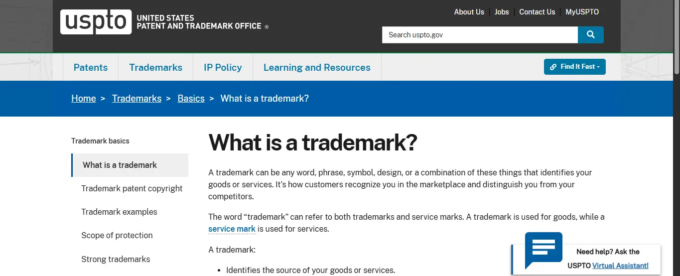
In its most basic sense, a trademark is something that identifies your business, product, or service. Anything can be a trademark from a slogan to a logo to nomenclature. Disneyland’s slogan “The Happiest Place on Earth” can be trademarked, as can Pepsi’s red, white, and blue orb logo, or McDonald’s Chicken McNuggets. While other companies can make chicken nuggets, the trademarked term “Chicken McNuggets” can only come from McDonald’s. If it relates directly to what you’re selling, it can be trademarked, granting legal protections should someone try to copy it. Say someone pours maple syrup in some fizzy water, puts it in a blue can with an orb on the front and calls it Poopsi, Pepsi has a leg to stand on in court.
As businesses grow and their sphere of influence expands beyond a certain geographic area, the people behind the business may want to register their trademark with the United States Patent and Trademark Office. Successfully doing this grants them even more protection. As an example, let’s take a look at my favorite donut chain, Winchell’s. If you’ve never heard of Winchell’s, it’s probably because you don’t live in California; however, in the Golden State it’s a very popular brand. The chain could call its name a trademark, and while it would protect them from some other donut shop calling itself Winchell’s in Los Angeles, it couldn’t stop someone in Pittsburgh, Pennsylvania from doing the same thing. However, in 1974, Winchell’s applied for and received registered trademark status through the US government, so now if you’re opening a donut shop anywhere in the country, calling it Winchell’s is pretty much off the table.
So what does Disneyland, nuggets, and the world’s best donuts (I said what I said, Dunkin’) have to do with Halo? Halo is a registered trademark owned by Microsoft.
This very critical fact sets up a serious problem, because despite being the United States government, the Trump administration can not just use Halo or its assets willy-nilly as it pleases any more so than it can use Pepsi or Winchell’s.
Hence, we have one of two situations here:
The Trump administration illegally used a registered trademark belonging to Microsoft.
We all know artificial intelligence steals assets from all sorts of media left, right, and center. The techbro oligarchs are on the hook for that one. But whether an algorithm or an idiot made the Trump and ICE memes is irrelevant; they used registered trademarks belonging to Microsoft. The application was filed in 2017 and granted in 2021, and Microsoft have been using assets of the brand for profit since the first game released in the early 2000s. Therefore, the government used those assets illegally (MAGA breaking the law? Groundbreaking) and Microsoft would have a leg to stand on in court should they choose to sue.
The major players in gaming are extremely familiar with litigation; Nintendo practically fires cease-and-desist letters out of a rapid-fire minigun. Currently the Mario Machine is in court with the creators of Pokémon-You-Ordered-From-Temu knockoff Palworld over a copyright infringement case involving capturing game mechanics. (There’s a lot of debate over the legitimacy of copyrighting game mechanics but that’s neither here nor there.) And yet throughout the week, Microsoft has stayed mysteriously silent.
One would think that Microsoft would want to protect what’s rightfully theirs, especially when its use puts zero dollars into the bank account of a corporation leaning hard into avarice. That’s what the New York Knicks did when wildly-popular mayoral candidate Zohran Mamdani used an altered version of their logo on the campaign trail, slapping the Democratic candidate with a cease-and-desist alongside a statement clarifying that they do not endorse Mamdani. (It should be noted that the Knicks made no such fuss when Cuomo posted a picture of himself and disgraced mayor Eric Adams courtside at a Knicks game.)
And it’s not difficult to speak out against the infringement. Many of the original Halo developers have made statements against the administration’s posts, saying that the Flood were fictional creatures and not representative of any group of people and calling the recruiting campaign “absolutely abhorrent.”
The other possibility is more nefarious, and ties into the reputations of megacorporations inside and outside the world of gaming.

The Trump administration illegally used a registered trademark belonging to Microsoft, and Microsoft is fine with that.
Whether it was deliberate or just Microsoft cowering in the corner, their silence speaks volumes. And either option is possible; taking a look at the list of corporate donors to Goldmember’s Big Bullsh*t Ballroom, it contains some usual suspects such as Amazon, Apple, Meta, and well lookie here… Microsoft.
Either way, it boils down to this: not content to sell their fans out to shower in money, Microsoft has sold its soul (inasmuch as a corporation can have one) to stay in the fickle good graces of King Felonius II.
It’s time to remind ourselves as gamers that Microsoft has lost the ability to speak any language other than money. For those who can’t afford to shell out the solid grand for a ROG Xbox Ally X or whatever Microsoft decides to slap on the mysterious next-gen console/PC hybrid, it might be time to make the change to Sony or Nintendo. It’s worked on Target, and it definitely worked on Tesla.
Gamers need to start talking with their wallet, and let Microsoft know that if they give their green to put gold in the White House, the Green Machine could plunge into the red.
At least when Nuka-Cola engaged in shady business practices, people got soda and a theme park out of the deal.
Next: Discuss Microsoft’s Recent Business Decisions on the PopGeeks Video Games Forum
Key Takeaways
- Halo is a registered trademark owned by Microsoft.
- Trademark enforcement typically requires active response to prevent dilution.
- Public messaging using game imagery can shift meaning outside narrative context.
- Silence from corporations can influence audience interpretation.
- Brand identity and cultural perception shape long-term franchise relationships.


11 replies
Loading new replies...
A Cajun queen with finesse
Member
❤️ I want nobody but you
Member
5 Unsuspecting Causes of Windshield Damage and How
Heaven is a Place on earth, Korea
Member
Member
Member
Join the full discussion at the PopGeeks.com Forum | Indie Games, Movies, TV & Comics →