Peter Jackson & Colossal Biosciences: Reviving the Southern Giant Moa

NELLY17

Administrator
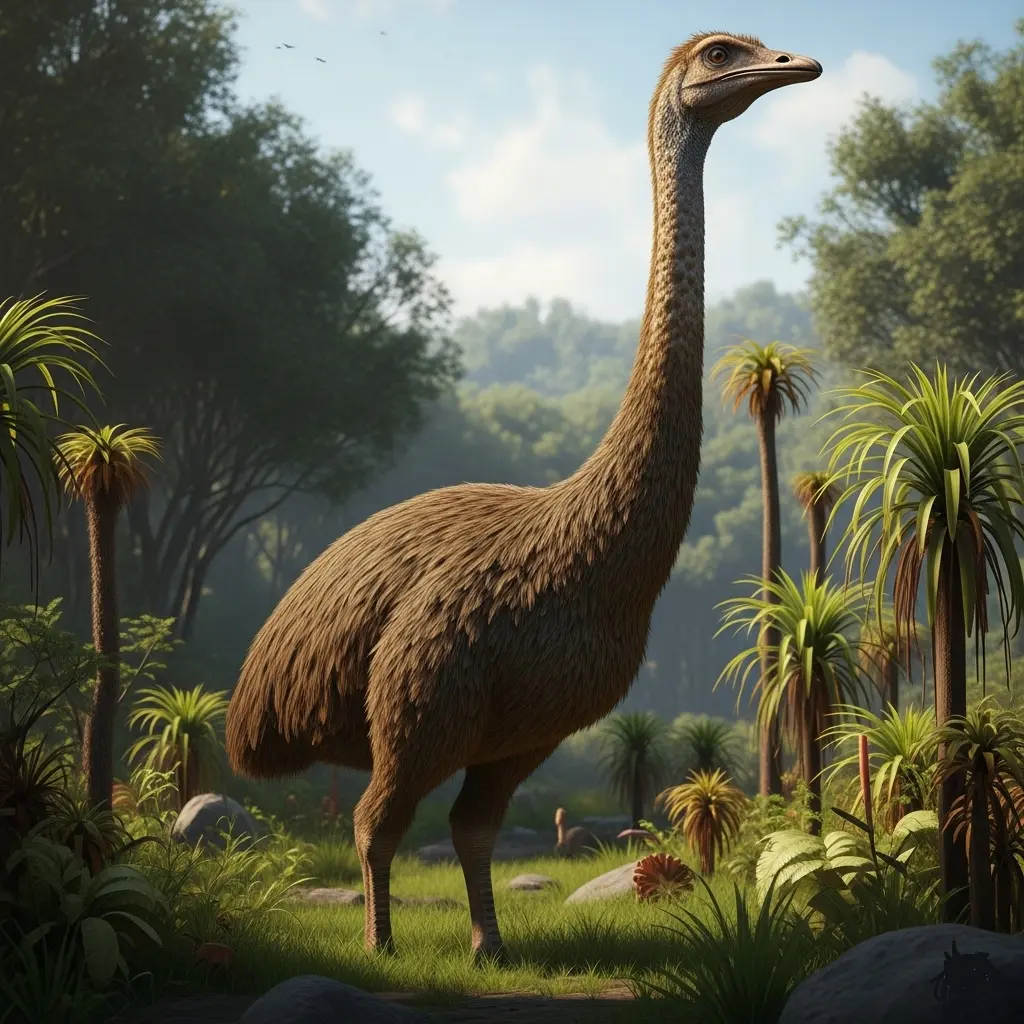
Southern Giant Moa Will Walk Among Us Again Peter Jackson, prehistoric megafauna, and the strangest comeback since the Dire Wolf For centuries, the Southern Giant Moa existed only in museums, fossil records, and the fever dreams of evolutionary biologists. Standing up to 12 feet tall, this extinct, flightless, feathered skyscraper once ruled the forests of New Zealand—basically Big Bird, if Big Bird skipped leg day for no one. The Giant Southern Moa was a legend for the Mauri. But now, thanks to a surprising partnership between Peter Jackson and a biotech company that just revived the Dire Wolf, this majestic bird might literally walk the Earth again. Yes, science is officially unhinged. And we are here for it. A Land Before Predators New Zealand isn’t mammal-free (sorry, bats and marine mammals), but it was famously devoid of native land-dwelling predatory mammals for millions of years. That left birds to fill nearly every ecological role—some became insect hunters, some became herbivores, and some, like the moa, just went full kaiju. There were nine known species of moa, ranging from the size of a turkey to the “did that bush just move?” scale of the Southern Giant Moa. These enormous birds once […]
Read original article here:
 
This is a dangerous science project dressed up as conservation. I’ve seen enough in my lifetime to know when people are overconfident. CRISPR, cloning, synthetic embryos—it’s too much. Nature doesn’t need our corrections. We always make it worse. Moas went extinct for a reason. What if this thing becomes aggressive? Cassowaries are deadly and they’re real birds today. Why would we recreate something even bigger without knowing how it’ll behave?
 
Science is powerful, yes, but it must have limits. Just because we can do something doesn’t always mean we should. Reviving an extinct species, especially one that died out because of human actions, is not the same as correcting a mistake. We are not gods. We don’t fully understand how the environment has changed since the moa disappeared. What if bringing them back causes new damage? Nature is a complex system. This kind of interference feels like ego, not wisdom. I teach my students to respect life, not control it.
 
We’re entering a very strange age, scientifically speaking. On one hand, I think this is genius-level stuff. Extracting viable DNA, gene editing, large surrogate birds? It’s like assembling a living jigsaw puzzle. But part of me asks: how do you scale this up responsibly? What happens after the first few birds are born? Do we release them into the wild? Feed them? Breed more? How much land will they need? Will they become pests? These things matter. Just creating a living moa isn’t success—keeping them thriving is.
 
I’ve been birdwatching since the 80s, and I never dreamed I would live to see the moa again. This is emotional for me. I remember showing my students bones in books and telling them about how special New Zealand was. Now, maybe they’ll be able to see these birds with their own eyes. I just hope we treat them with respect. These are not pets. They are ancient beings. I think we need to prepare young people to see them as part of the land again, not just a new zoo animal.
 
This sounds cool but also kind of insane. I mean, I watch a lot of sci-fi, but this is next-level. A 12-foot bird that we are bringing back from bones? That’s nuts. But I trust Peter Jackson’s taste. If he’s in, it probably means the story is as good as the science. I hope they make a VR sim or something with the bird. Imagine walking next to it in a headset. Would be a trip.
 
This project reminds me of the myth of Prometheus. We reach for knowledge and control, and in doing so, we forget the consequences. There is a kind of sadness in needing to resurrect what we killed. It feels like an apology wrapped in ego. Do we bring the moa back for nature’s balance, or because we are afraid to admit we can’t control everything? Maybe the more respectful act is to leave the past as it is and become better guardians of the present.
 
I am very optimistic about this project. Bringing back the Southern Giant Moa could be a model for future conservation efforts worldwide. It shows that extinction may not be permanent, and science can help repair damage caused by humans. The article made good points about the moa being a keystone species and how their return could restore natural balance. I also appreciate that this is happening in New Zealand, a country known for strong conservation programs. The partnership with Māori communities is very important to make this a success. I believe this could be the start of a new era for protecting biodiversity.
 
The idea of a “12-foot prehistoric thunder-chicken” sounds exciting, but I want to focus on the practical side. Bringing back an extinct species is very complex. The article mentions that the moa’s closest relatives cannot incubate such large eggs, so scientists will use ostriches or emus. This must be very difficult and may have many risks. I am also interested in how they will make sure the moa does not harm the current ecosystem or human communities. Still, I like that this project also aims to help endangered species with its technology. It is important to use new science carefully and responsibly.
 
I know this might sound silly, but I couldn’t stop thinking—can people ride these moas? I mean, they’re 12 feet tall and used to roam freely like giant birds straight out of a video game. It really reminds me of Chocobos from Final Fantasy. If they’re bringing them back, would it even be possible to train or ride one someday? I understand they’re not being brought back for fun or transport, but the idea is hard to ignore. Of course, I know they’re wild animals and probably not safe or suitable for riding. Still, if they’re going to walk among us again, I wonder how close people will be allowed to get. Would they be calm or aggressive? I hope someone studies their behavior if they succeed in cloning them. Maybe not for riding, but even seeing one from a short distance would be incredible.
 

how to help support popgeeks, popgeeks, pop geeks

Latest News & Videos

Latest News

Back
Top