
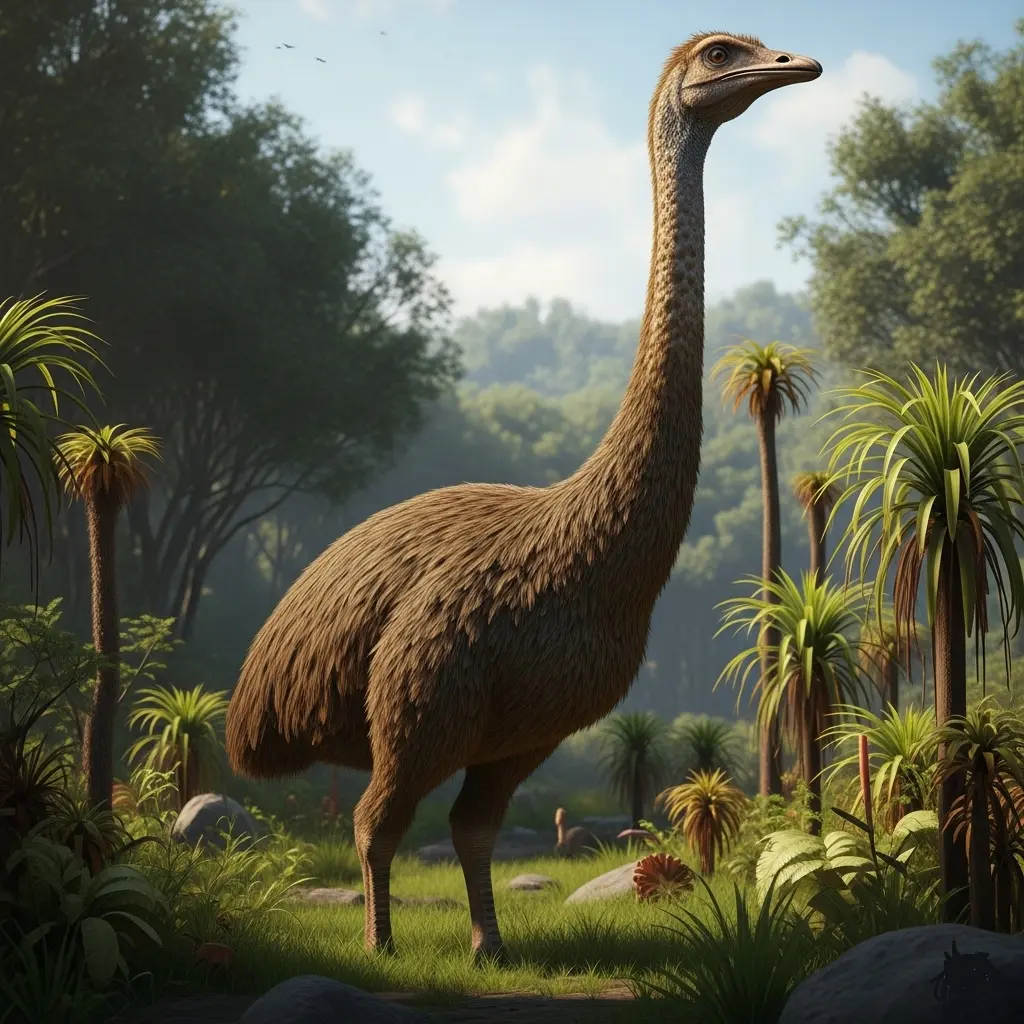
Southern Giant Moa Will Walk Among Us Again
Peter Jackson, prehistoric megafauna, and the strangest comeback since the Dire Wolf
For centuries, the Southern Giant Moa existed only in museums, fossil records, and the fever dreams of evolutionary biologists. Standing up to 12 feet tall, this extinct, flightless, feathered skyscraper once ruled the forests of New Zealand, basically Big Bird, if Big Bird skipped leg day for no one. The Giant Southern Moa was a legend for the Mauri.
But now, thanks to a surprising partnership between Peter Jackson and a biotech company that just revived the Dire Wolf, this majestic bird might literally walk the Earth again.
Yes, science is officially unhinged. And we are here for it.
A Land Before Predators
New Zealand isn’t mammal-free (sorry, bats and marine mammals), but it was famously devoid of native land-dwelling predatory mammals for millions of years. That left birds to fill nearly every ecological role, some became insect hunters, some became herbivores, and some, like the moa, just went full kaiju.
There were nine known species of moa, ranging from the size of a turkey to the “did that bush just move?” scale of the Southern Giant Moa. These enormous birds once roamed freely across New Zealand, reshaping landscapes, spreading seeds, and not fearing a single thing… until humans showed up.
When the Māori arrived around 1300 AD, they encountered a land full of tasty, trusting flightless birds. Unsurprisingly, the moas didn’t last long. Within a couple hundred years, they were completely wiped out, leaving only bones, legends, and a suspicious amount of bird-shaped holes in New Zealand’s ecosystems.
Now, in an unexpected full-circle moment, Māori communities are helping to bring these extinct giants back.
Peter Jackson & the Clone of the Ring
Enter Peter Jackson, director of The Lord of the Rings and The Hobbit, and now executive producer of The Bird That Time Forgot. He’s teamed up with Colossal Biosciences, the Texas-based company leading the charge on real-life de-extinction.
You might’ve seen them in the news recently. Why? Because they just revived the Dire Wolf– yes, that Dire Wolf, once thought to be too genetically distant to reconstruct. Now, they’re pushing the boundaries further, aiming to bring back the Woolly Mammoth, the Thylacine, the Dodo, and the Ground Sloth.
And now? They’re aiming their test tubes at New Zealand’s feathered folklore.
How Do You Clone a 12-Foot Bird?
Short answer: Carefully. Longer answer: through high-level genetic wizardry.
The moa’s closest living relatives are tinamous, small ground-dwelling birds from South America. They lay green eggs, they look cute, and they absolutely cannot incubate a bird the size of a vending machine. So while they’re useful for DNA reference, they’re not going to be surrogate moms.
Instead, scientists will extract and reconstruct viable moa DNA from preserved remains, many of which have been remarkably well-kept in New Zealand’s dry caves. Using gene editing tools like CRISPR, the plan is to engineer moa embryos and implant them into larger modern ratites– likely ostriches or emus.
Yes, this will involve taking one large, confused bird and convincing it to hatch a much larger, possibly more confused bird. What could go wrong?
But Seriously, Why Bring Southern Giant Moa Back?
It’s easy to roll your eyes at this and say, “Just because we can doesn’t mean we should.” But there are compelling reasons.
Moas were keystone species, particularly as seed dispersers for many native New Zealand plants. Without them, entire ecosystems shifted. Their return could help restore those natural balances, reviving the unique biodiversity that developed in New Zealand’s isolation.
Even more importantly, the cutting-edge technology involved, like ancient DNA recovery, synthetic biology, and precision cloning, could have immediate conservation benefits for currently endangered species like the Kakapo, Kiwi, and Takahe. If we can bring back the dead, maybe we can save the barely-alive.
Also, let’s be honest: nobody’s getting excited over “slightly large turkey makes mild comeback.” But a 12-foot prehistoric thunder-chicken? That’s headline material.
Why This Moa? Because It’s HUGE (and Genetically Intact)
Of the nine extinct moa species, the Southern Giant Moa (Dinornis giganteus) was picked not just for drama (though it brings that in spades), but because it has the best-preserved genetic material.
Scientists have access to relatively complete DNA from multiple individuals. This makes it a prime candidate for de-extinction, not to mention, the visuals of a two-story bird striding through the ferns of Fiordland is pure cinema.
New De-Extinction Announcement: the Legendary Southern Giant Moa of New Zealand
https://www.youtube.com/watch?v=cg5skhUStRI&t=4s
Is New Zealand Ready for a Moa Comeback?
You bet. With vast conservation areas, predator-free sanctuaries, and a national history that already involves rescuing bizarre birds (hello, Kakapo breeding programs), New Zealand is one of the few places on Earth actually prepared to reintroduce a prehistoric species.
Plus, culturally, this isn’t just science, it’s restoration. Māori communities have deep historical and mythological ties to the moa, and their involvement ensures that this isn’t just about spectacle, it’s about reconnection.
And let’s be honest, this is the same country where people hike to volcanoes named Mount Doom for fun. A giant bird comeback? Just another Tuesday.
Final Thoughts: The Birds Are Back in Town
The return of the Southern Giant Moa is more than just a flashy headline, it’s a potent mix of cultural healing, scientific ambition, and ecological repair.
We’re entering an age where extinction might not be forever, where lost creatures of myth and bone can step back into the sun. And this time, instead of running from them like in Jurassic Park, we’re carefully welcoming them home.
Just… maybe don’t try to feed it.


19 replies
Loading new replies...
A Messenger of Christ"
Here's looking at you, kid.
New Member
Active Member
Lord of the Stars
New Member
Have a mustache, be cool.
Stupid Manthing
New Member
Join the full discussion at the PopGeeks.com Forum | Indie Games, Movies, TV & Comics →