
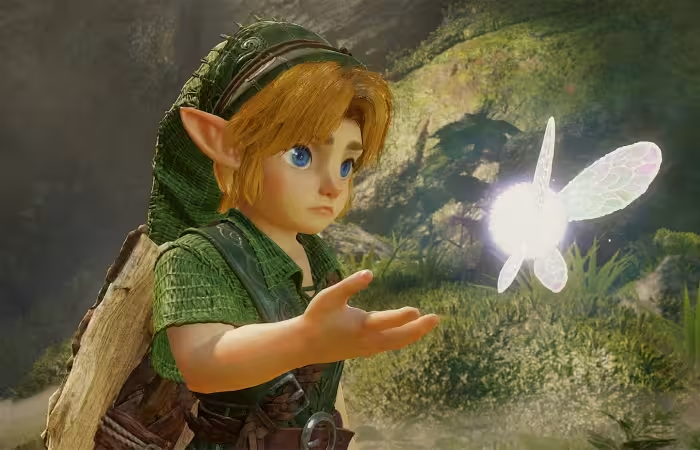
Everything old is new again: The Legend Of Zelda: Ocarina Of Time, one of the coolest, most impactful, and most important games from the 90s, will be resurrected for the 2020s in just three days. And on the eve of the launch of the Nintendo Switch 2 version, the company is publishing a series of interviews with the creative team. Here’s what we’ve learned so far, which contains no spoilers (and even if it did, this is literally the same game, so the statute of limitations has expired on something from 1998)…
It’s not Grezzo: Nintendo has a live-action Zelda movie coming in 2027. The sudden appearance of an Ocarina of Time remake feels like a reaction to that, as if the dialogue internally was “We need a new Zelda game and fast, in case the people seeing the movie want to buy Switch 2s. Call up development studio Grezzo and slap together an OOT remake!” That was my theory and based on their past behavior, it seemed sound. Grezzo created the 2011 remake, among other things.
But the Ocarina of Time remake was actually created internally, under the direction of longtime producer Eiji Aonuma, as a way of easing the newer generation of programmers into the basic concepts of a good Zelda game. “By learning the game structure and development style behind the original The Legend of Zelda: Ocarina of Time, and by actually rebuilding it as a full remake, it may trigger new insights that they can carry forward into future development,” Aonuma said. “If we could achieve that, I thought it would be incredibly valuable. That’s what led us to the conclusion that now is the right time to revisit The Legend of Zelda: Ocarina of Time once again.”
There were additional warp points in this new version, until there weren’t: The remake will allow Link to do some things he couldn’t do in the late 90s, like jump on command or use a stick to control a camera. But one thing the team thought of adding was additional warp points to make travel across the kingdom easier. They changed their minds once they realized it futzed with the sense of discovery. “When we actually tried playing the game with those warp points,” says Aonuma, “we realized that we were missing out on the moments of discovery that came from stopping along the way and wondering, ‘Wait, what’s this?’ Through this development process, we were reminded once again just how important those moments are to the very structure of The Legend of Zelda: Ocarina of Time. So even though I was the one who proposed adding warp points, they just weren’t working for me in the end, so I got the team to take them all back out again. (Laughs)”
Who made Link’s snazzy new tunic? Link himself: “If the fabric looked too neat, as though it had been machine-woven, it wouldn’t look like something the children living in the forest had made themselves,” explains art director Aya Shida. “It just wouldn’t feel believable. So we started by asking what kind of fabric those children might actually weave and wear. We looked at materials in museums and even experimented with making our own fabric from thread to get a better sense of what it should be like. For this game, the hardware allowed us to depict that level of detail, but that also meant we needed to do our research until we had a clear idea of what we wanted to create. As a design team, we often talked about imagining the story behind every object in the game as we created it.”
Check out the full interview on Nintendo’s website. The second half of the conversation will be released tomorrow.

No replies yet
Loading new replies...
Join the full discussion at the PopGeeks.com Forum | Indie Games, Movies, TV & Comics →