Bolt
boogie woogie feng shui
I posted this on another board I visit to clear up some confusion on weight training for speed and agility sports like martial arts and gymnastics, and it was so long-winded and information-saturated that I figured I should at least save it and post it up here if anybody gives a ****. It's kind of out of context because I was addressing one dude in particular, but hopefully someone else will be able to get something out of it as well. Enjoy.
"There's a few glaring misconceptions that somehow still make their way into seemingly every conversation on weight training in conjunction with speed and agility disciplines:
1. That weight training will slow you down.
2. That lifting lighter weight for more reps gets you "toned."
3. As soon as you start lifting you'll balloon up to 300 pounds. It can't and won't happen. Pretending that it will is like an insult to all of us that slave away at the gym trying to get bigger.
It is true that some people beef up more quickly than others when they begin weight training. Usually this is because their body is approaching a more natural weight and level of muscle mass. Generally speaking though, you can't "accidentally get huge," and really, the commonly accepted axioms for most beginner lifters are usually what will garner you that opposite of what you're trying to achieve. What I mean is this:
-The more repetitions you perform, the more lactic acid buildup there is occuring in muscle tissue. When you lift weights, what you are essentially doing is damaging the muscle, creating tiny tears and bruising in the fibers. When you allow yourself to rest (and I mean longterm rest, as in the next day, not just between sets--this is why you shouldn't work the same muscle groups two days in a row unless you're on a highly specialized cycle), the damage in the muscle tissue is "patched up" by new muscle fiber, scar tissue, and liquid. This is what makes you look bigger, when the truth is the majority of new buildup is not functional muscle. This is also why a small powerlifter can generate much more force than a much larger bodybuilder.
-What you want to achieve is maximum muscle contraction efficiency, right? So logically, what is the best way to go about this: doing something moderately intensive many times or performing a very high intensity movement once or twice? In the latter case, what you're mainly training is your central nervous system, which controls muscular contraction by way of brain signals. There are different motor units in the body that control muscular contraction; high intensity work allows you to train the impulses that control these motor units to work in synchronization, thus resulting in higher force output with minimal bulk.
If you need a visual aid:
This man's personal best Olympic (full depth) backsquat is 728 lbs.
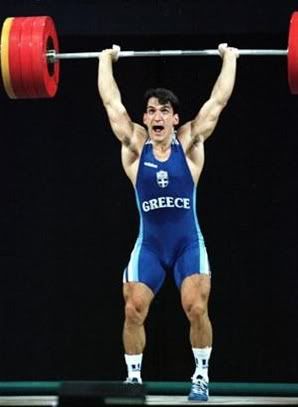
Sure he's pumped like a pair of Nike Dunks, but he's not at all what I would call "huge."
This guy, on the other hand...

... probably doesn't squat over 500 lbs, despite having much more mass. The difference is in the way you train.
Now, as a guy that's into the same kind of stuff you are (martial arts, acrobatics, etc.), I can say that I generally tend to try to find a balance between the two. Bodyweight training will only get you so far, and, while it's a great way to start building general strength, eventually you're going to have to get a membership somewhere or gain access to some equipment. I don't want to get too long-winded, but my workouts generally look something like this:
-Day 1- Lower body max effort (1-3 reps)
-Day 2- Upper body max effort (1-3 reps)
-Day 3- Lower body power/hypertrophy (sets of 1-2 for power generation/sets of 8-10 hypertrophy)
-Day 4- Upper body maintenance/hypertrophy
By following this kind of formula I get a good balance of pure, raw strength gains and reinforcing, purdy size increases. I started working out when I was 19 years old and I weight 135 lbs. 2009 will be the beginning of my third year lifting and I have put on about 20 pounds, and I can tell you with full sincerity and confidence that I am the strongest, fastest, springiest, most durable, and in the best cardiovascular shape of my life. It's true that by adding muscle mass you are adding actual bodyweight, but by developing lean, functional muscle, that weight will actually be helping you push harder, move faster, and generate more force.
Remember, knowledge is power. If you're turned off by the idea of getting bulky then you may end up wasting time doing things that you're not going to see any benefit from. The key is knowing how to train, when to train, what to train, and what to train how. There's a lot of science behind it, and unfortunately I still know very little, but I know enough to be able to damn near guarantee you that you would see some physical improvement from doing some weight training. If you ever want to discuss exercises or the technical aspects of lifting I'd be glad to share what little knowledge I have, and I could also stand to learn a few things from smaller, more flexible athletes as well as the big diesel guys.
Sorry for the long post. In closing, some general rules to keep in mind:
-Higher reps @ lower weight = mass.
-Lower reps @ higher weight (between 1-3 rep maximum effort) = strength/responsiveness (however you want to put it.)
-_____ reps until height/speed dropoff = power.
If anything, it's better to at least put some extra weight on the lifts you're already doing to add resistance to the muscle contraction, even something like swimming laps or doing your punches and kicks under water. Hope it helps!"
"There's a few glaring misconceptions that somehow still make their way into seemingly every conversation on weight training in conjunction with speed and agility disciplines:
1. That weight training will slow you down.
2. That lifting lighter weight for more reps gets you "toned."
3. As soon as you start lifting you'll balloon up to 300 pounds. It can't and won't happen. Pretending that it will is like an insult to all of us that slave away at the gym trying to get bigger.
It is true that some people beef up more quickly than others when they begin weight training. Usually this is because their body is approaching a more natural weight and level of muscle mass. Generally speaking though, you can't "accidentally get huge," and really, the commonly accepted axioms for most beginner lifters are usually what will garner you that opposite of what you're trying to achieve. What I mean is this:
-The more repetitions you perform, the more lactic acid buildup there is occuring in muscle tissue. When you lift weights, what you are essentially doing is damaging the muscle, creating tiny tears and bruising in the fibers. When you allow yourself to rest (and I mean longterm rest, as in the next day, not just between sets--this is why you shouldn't work the same muscle groups two days in a row unless you're on a highly specialized cycle), the damage in the muscle tissue is "patched up" by new muscle fiber, scar tissue, and liquid. This is what makes you look bigger, when the truth is the majority of new buildup is not functional muscle. This is also why a small powerlifter can generate much more force than a much larger bodybuilder.
-What you want to achieve is maximum muscle contraction efficiency, right? So logically, what is the best way to go about this: doing something moderately intensive many times or performing a very high intensity movement once or twice? In the latter case, what you're mainly training is your central nervous system, which controls muscular contraction by way of brain signals. There are different motor units in the body that control muscular contraction; high intensity work allows you to train the impulses that control these motor units to work in synchronization, thus resulting in higher force output with minimal bulk.
If you need a visual aid:
This man's personal best Olympic (full depth) backsquat is 728 lbs.
Sure he's pumped like a pair of Nike Dunks, but he's not at all what I would call "huge."
This guy, on the other hand...
... probably doesn't squat over 500 lbs, despite having much more mass. The difference is in the way you train.
Now, as a guy that's into the same kind of stuff you are (martial arts, acrobatics, etc.), I can say that I generally tend to try to find a balance between the two. Bodyweight training will only get you so far, and, while it's a great way to start building general strength, eventually you're going to have to get a membership somewhere or gain access to some equipment. I don't want to get too long-winded, but my workouts generally look something like this:
-Day 1- Lower body max effort (1-3 reps)
-Day 2- Upper body max effort (1-3 reps)
-Day 3- Lower body power/hypertrophy (sets of 1-2 for power generation/sets of 8-10 hypertrophy)
-Day 4- Upper body maintenance/hypertrophy
By following this kind of formula I get a good balance of pure, raw strength gains and reinforcing, purdy size increases. I started working out when I was 19 years old and I weight 135 lbs. 2009 will be the beginning of my third year lifting and I have put on about 20 pounds, and I can tell you with full sincerity and confidence that I am the strongest, fastest, springiest, most durable, and in the best cardiovascular shape of my life. It's true that by adding muscle mass you are adding actual bodyweight, but by developing lean, functional muscle, that weight will actually be helping you push harder, move faster, and generate more force.
Remember, knowledge is power. If you're turned off by the idea of getting bulky then you may end up wasting time doing things that you're not going to see any benefit from. The key is knowing how to train, when to train, what to train, and what to train how. There's a lot of science behind it, and unfortunately I still know very little, but I know enough to be able to damn near guarantee you that you would see some physical improvement from doing some weight training. If you ever want to discuss exercises or the technical aspects of lifting I'd be glad to share what little knowledge I have, and I could also stand to learn a few things from smaller, more flexible athletes as well as the big diesel guys.
Sorry for the long post. In closing, some general rules to keep in mind:
-Higher reps @ lower weight = mass.
-Lower reps @ higher weight (between 1-3 rep maximum effort) = strength/responsiveness (however you want to put it.)
-_____ reps until height/speed dropoff = power.
If anything, it's better to at least put some extra weight on the lifts you're already doing to add resistance to the muscle contraction, even something like swimming laps or doing your punches and kicks under water. Hope it helps!"
Last edited by a moderator: