Queen Woo ~ I Am the Queen and I Will Prove It!

cmoneyspinner

What does the Fox say?
Staff member
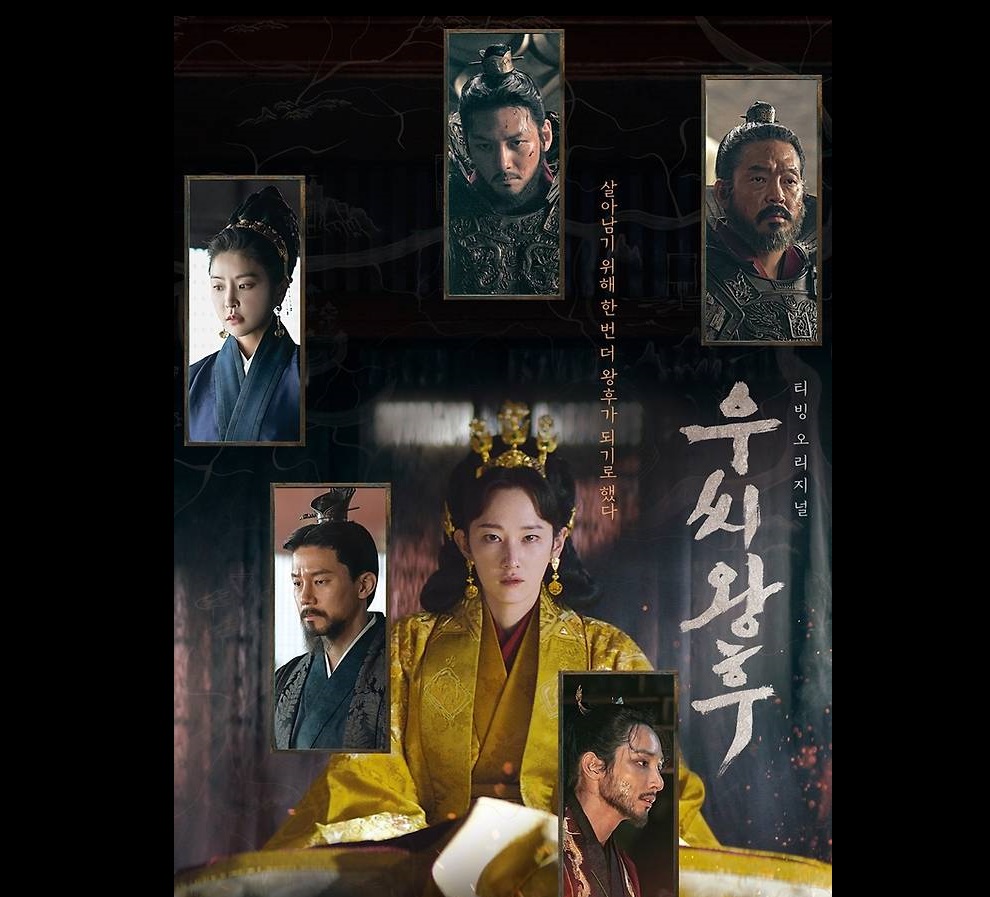
“Queen Woo” is a Korean drama mini-series released in 2024, with 8 episodes, categorized as historical fiction, costume and period, Sageuk, Political, War, and Romance; streaming free on Paramount Plus. SUMMARY: “If the king hides while his people are sacrificed, it’s not a true victory.” If the king can not protect his queen, then she must protect herself. In a male-dominated world, will that be possible? ♦ For the Queen It’s Kill or Be Killed “Queen Woo” is set during the Goguryeo Dynasty. There are five (5) tribes (families) and one (1) king with one (1) queen. The king’s father lost most of the kingdom’s territory to the Han people. On his deathbed, he named his successor. It was not the eldest son, who thought that becoming the next ruling monarch was a given. Instead, the dying king gave the jade ring to his fourth son, Go Nam-Mu. In that instant, he went from being 4th Prince to King, and his wife, Woo Hee, went from being a Princess to being Queen. The dying king had one last request. He asked his son to get back the territory that he lost to the Han people. Go Nam-Mu took on this […]
Read original article here:
 
Last edited by a moderator:

Her use of the levirate marriage law is a fascinating strategic move. It wasn’t just about survival; it was about ensuring political stability in the kingdom. This shows her remarkable ability to adapt and lead in a male-dominated era. The series portrays her resilience beautifully, though I agree with the critique about the unnecessary nudity—it felt out of place and detracted from the narrative. Historically, it’s impressive that Queen Woo became queen twice, setting a precedent for female agency in Korean history.
 
I find the historical accuracy of Queen Woo intriguing, especially its depiction of Goguryeo customs like levirate marriage. It highlights how deeply intertwined personal and political lives were in that era. Queen Woo’s plight is not just a tale of survival but also an exploration of power dynamics in ancient Korea. That said, I wish the series had leaned more into authentic historical storytelling rather than sensationalizing certain aspects. The nudity and romance subplots, while dramatic, seemed to overshadow the more profound political and cultural themes. Still, it’s refreshing to see a strong female lead in historical fiction."
 
Queen Woo's story is empowering—she didn’t just accept her fate; she rewrote it. It’s rare to see a historical drama where the female protagonist is more than a damsel in distress. She’s a fighter, a strategist, and a leader. The fact that she had to rely on a male-dominated system to maintain her power makes her triumph bittersweet, though. I appreciate the show’s attempt to shed light on these dynamics, but some scenes could have been more tastefully executed.
 
I loved Queen Woo! It’s rare to see a historical drama that’s so action-packed and emotionally charged. Queen Woo’s journey from a powerless widow to a powerful queen was inspiring. I was particularly impressed by how the show portrayed her relationship with Eul Pa-So—it felt genuine and added depth to the story. The battle scenes were well-choreographed, and the cinematography captured the grandeur of the Goguryeo dynasty. Sure, some elements were over-the-top, but isn’t that part of the fun of historical fiction? For me, it was an unforgettable
 
Her use of the levirate marriage law is a fascinating strategic move. It wasn’t just about survival; it was about ensuring political stability in the kingdom. This shows her remarkable ability to adapt and lead in a male-dominated era. The series portrays her resilience beautifully, though I agree with the critique about the unnecessary nudity—it felt out of place and detracted from the narrative. Historically, it’s impressive that Queen Woo became queen twice, setting a precedent for female agency in Korean history.
The fact that the story is based on a real queen is even more fascinating. Talk about survival skills!

I watched another Kdrama and the girl had gone back in time. When she did various things, the prince would threaten her and she finally said: “I get it! I get it! In this time period, killing people is easy for you!”
 
Queen Woo's story is empowering—she didn’t just accept her fate; she rewrote it. It’s rare to see a historical drama where the female protagonist is more than a damsel in distress. She’s a fighter, a strategist, and a leader. The fact that she had to rely on a male-dominated system to maintain her power makes her triumph bittersweet, though. I appreciate the show’s attempt to shed light on these dynamics, but some scenes could have been more tastefully executed.
It's hard enough to survive when you can see your enemy. The fact that her sister was a hidden enemy made her life twice as hard.
 

how to help support popgeeks, popgeeks, pop geeks

Latest News & Videos

Latest News

Back
Top