Justin J
Active Member
The panopticon idea is both fascinating and a bit scary. It shows how smart architectural design can also suggest controlling society. Jeremy Bentham imagined the panopticon between 1786 and 1788. It was not just a building. It was meant to be a place where everyone could be watched without needing cameras.This building idea made people think about a world where everyone feels watched all the time. Now, as we live surrounded by digital watchers, Bentham's idea seems more real than ever. Our lives today reflect the power and watchfulness Bentham imagined(1).
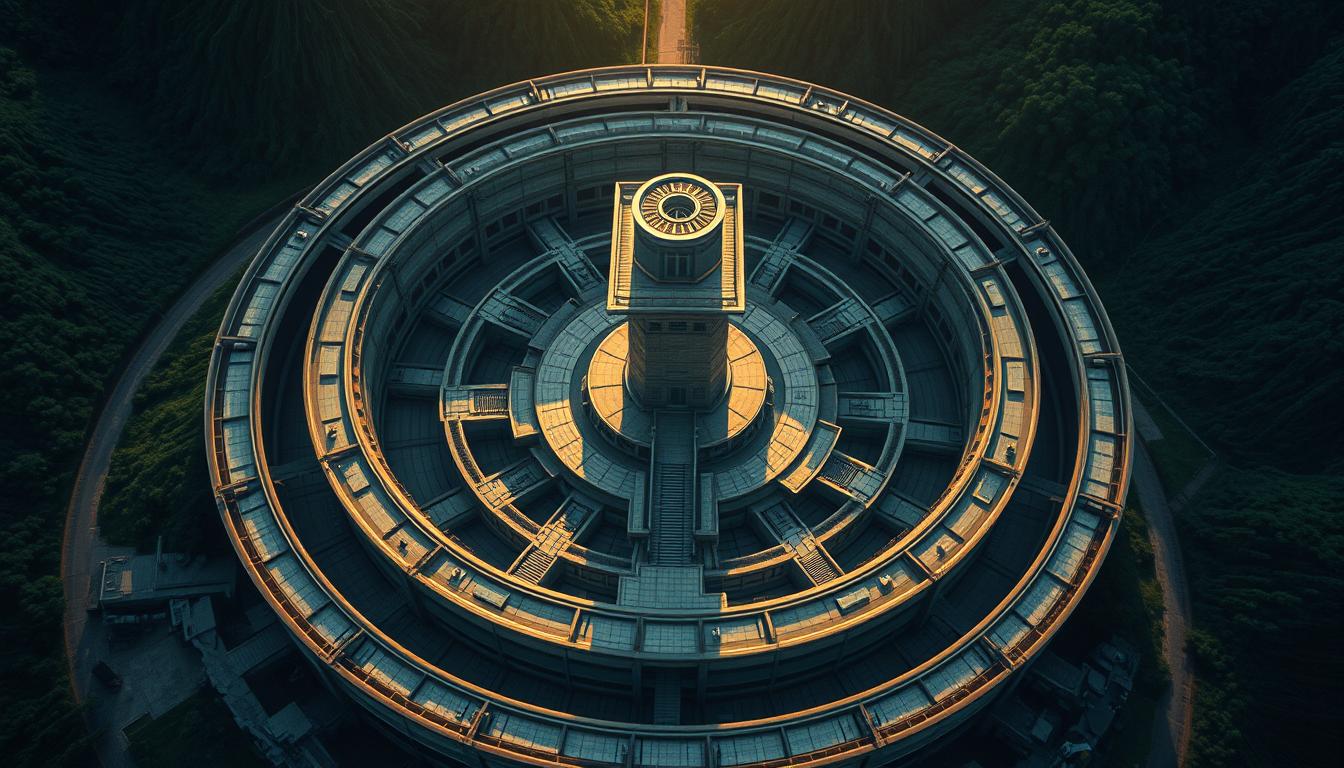
Bentham's idea caught the attention of British leaders because it used Thomas Hobbes' theory of pleasure and pain. This made them interested in changing how prisons were designed. Bentham got the idea while visiting the Mogilev district, seeing how being watched changes behavior. He shared his thoughts in works like 'A Fragment on Government'(2).
The circular prisons in the Netherlands and Presidio Modelo in Cuba were inspired by Bentham. They tried to watch and help inmates better, but faced issues like overcrowding(3).
Today, Lelystad Prison in Flevoland uses a digital version of Bentham's idea. It keeps order with technology that watches prisoners all the time(3).
Jeremy Bentham’s ideas continue to affect how we think about prisons and watching people. His work makes us think about surveillance, building design, and our rights. It shows the tricky balance between seeing and controlling people.
This design uses visibility to subtly control. Modern places like co-working spaces use this idea. They keep the panopticon's watching aspect, meeting today's needs(5).
Digital scores in China push this further. This stretches Bentham's idea into our digital age. It makes us think about privacy and freedom now(6).
This idea is seen today in fiber optic CCTV networks. Modern surveillance uses Bentham's thoughts. It combines new tech with the panopticon's design(5).
The panopticon's ideas still matter today. They make us think about power, watching, and privacy. It asks us to find a balance between being seen and being private(5)(6).
The original panopticon design, created by Bentham in the 1600s, had a circular shape with a central tower. This design let one guard watch all prisoners without them knowing if they were being watched.
Today, we see Panopticism outside of prisons too. Closed-circuit cameras and surveillance in cities show its deep impact on society(8)(7).
On social media, our actions create a digital footprint. This lets others watch our minor actions and interactions closely. It shows how Panopticism has entered the digital space deeply(8).
The fear of being watched affects how people act on social media. This need to regulate our behavior shows Panopticism's shift to the digital world. Even small actions are closely monitored(8).
In the end, the physical panopticon might not be common now. Still, its principles live on in our widespread surveillance culture. From prison architectures to digital tracking, Panopticism shapes our world where being seen means being controlled.
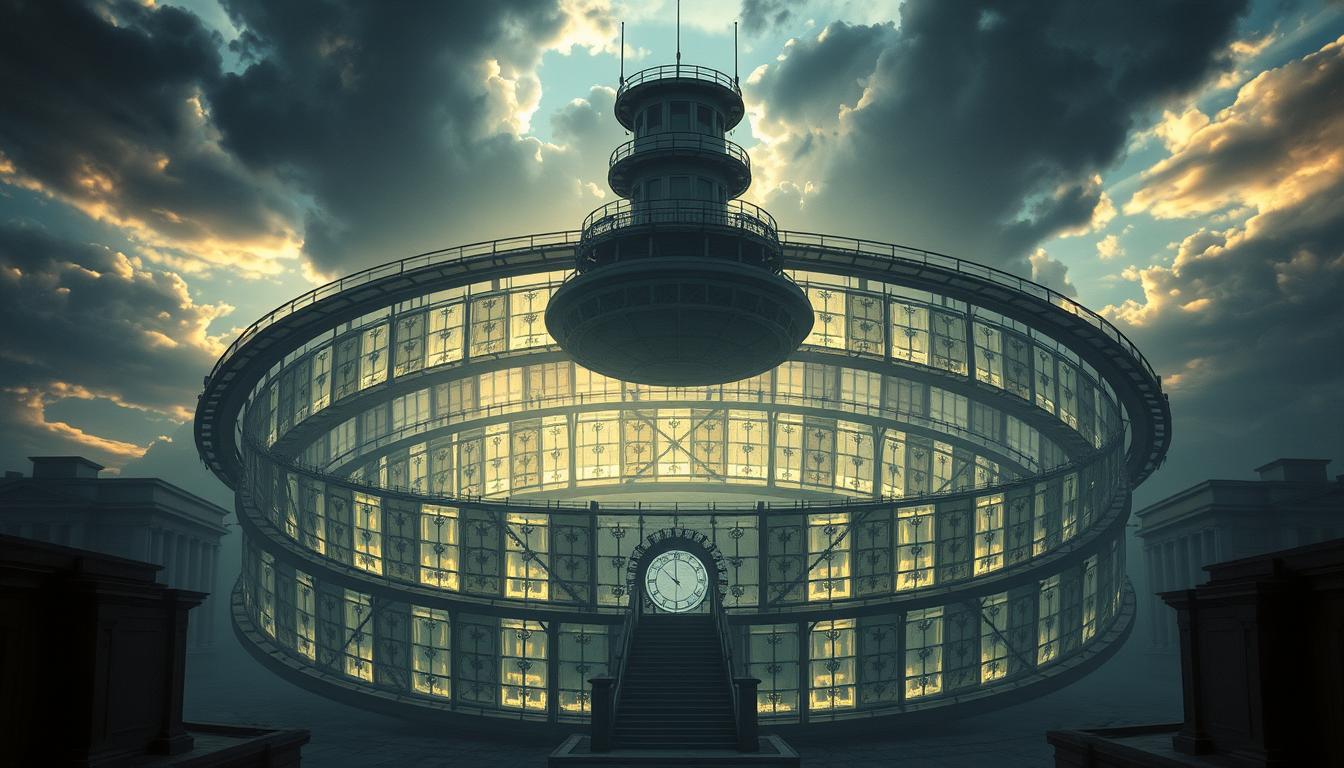
Disciplinary power, Foucault indicates, spreads across our lives, shaping identities and behaviors. It’s evident in schools where behavior is checked, and ideologies are embedded subtly. This molds societal norms through structured observations and exams(9).
Foucault's work is still vital today, showing how social control works through disciplinary power. His insights on panopticon theory's resilience explain current power dynamics. Surveillance leads to both oppression and chances for resistance(9)(10).
As we move deeper into an era of more surveillance, whether on social sites or through surveillance capitalism, we need to think hard. It's important to find a balance between staying connected and the mental strain these watchful eyes cause(12). Mental health, who we are, and our freedom are all at stake in this tricky situation. It demands a careful look and constant attention.
So, in a world hidden under the panopticon's shadow, our search for openness and mental well-being keeps challenging the usual ways. It pushes towards a future where control and watching are balanced with consent and ethics.
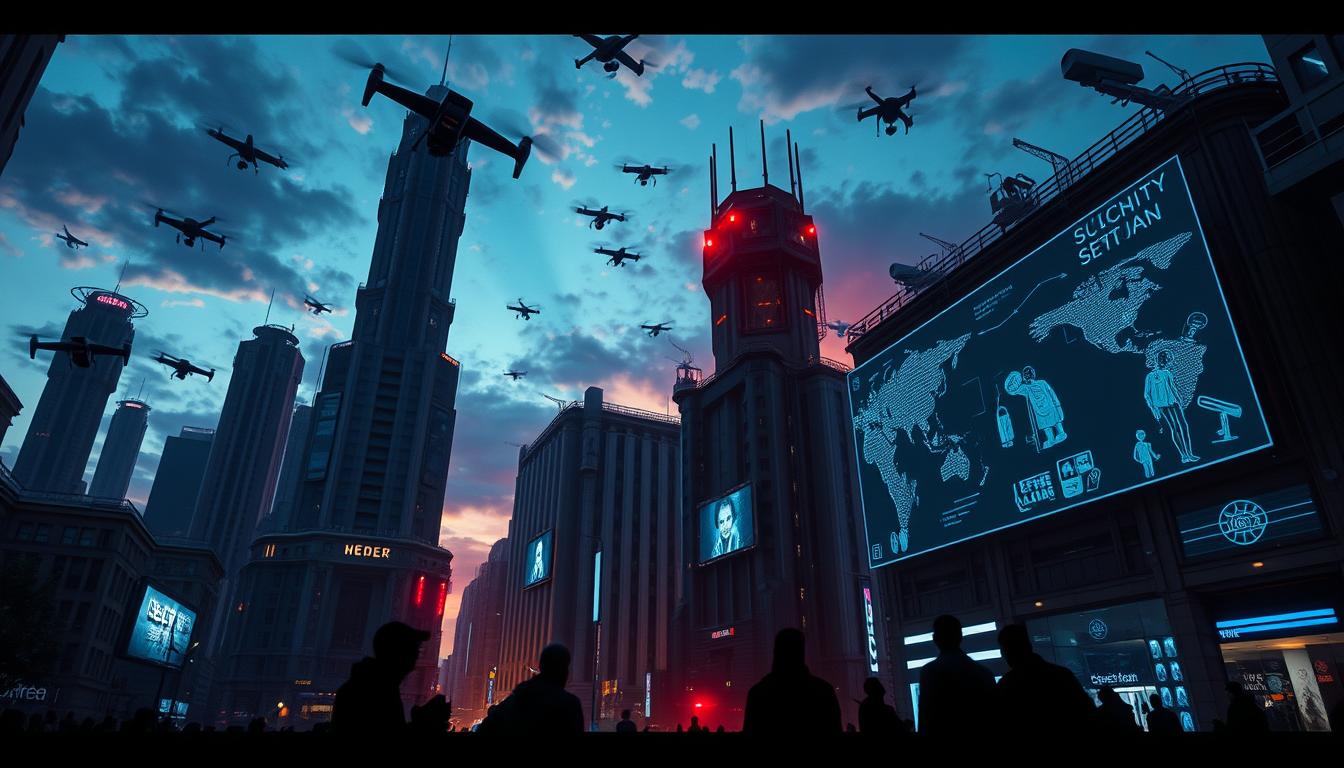
The Panopticon, created by Jeremy Bentham, aimed for constant watch as a control tool. Today's tech turns this idea into reality, watching our every move(13). It's like Bentham’s vision, where silent watchers monitor both openly and in secret(14).
Art and stories keep exploring the idea of the panopticon. It's not just an old concept; it's part of a living discussion. It makes us question power, control, and our rights in a world that watches our every move.
Michel Foucault, in "Discipline and Punish: The Birth of Prison," discusses how this design idea goes beyond jails. It affects many parts of society(18). The panopticon idea was widely used in factories to boost productivity by watching workers closely(19).
The panopticism idea is also key to Crime Prevention Through Environmental Design (CPTED). It uses design to lower crime by keeping potential criminals in view. This approach makes places safer by encouraging easy observation of surroundings(19).
In wrapping up, the connection between architectural theory and social control with designs like the panopticon perfect prison deepens our grasp of architecture's role. It's not just about buildings, but how they shape the way we interact and live as a society.
Today's urban planners walk a thin line between keeping spaces safe and respecting privacy. They use panopticon-like tactics to make areas welcoming yet supervised. Getting this balance right is key in creating cities that feel both secure and open to everyone.
In the digital world, thoughts from George Orwell and Michel Foucault have made us think more about surveillance. Foucault saw the panopticon as a symbol for societies that watch us closely, where power and watching are closely linked(23).
These tools have helped lower crime in big cities like Chicago and New York(24). Facial recognition is not just for fighting crime, but it's also important for public safety and catching fake documents(24).
Yet, we must think about our right to privacy. Online platforms make it easy to find information but also make our personal data less secure. This raises fears about identity theft and our personal information being sold(23). So, we need to consider why we're being watched, how it's done, and if it's too much(23).
This debate makes us wonder: how can we keep people safe without giving up our freedoms? As watching methods get better, our ethics and rules need to evolve too. Understanding the tech we have and the ethical rules we should follow is key.
Bentham's concept has inspired more than 300 prisons around the globe to adopt the panopticon style(26). Now, this idea lives in the digital world too. Devices and software watch over us, just like Bentham imagined. But today, we need to decide how much monitoring is too much. This balance between being watched and being free is crucial.
Bentham's old letters sparked a huge interest(27). His plan was to have just a few guards watch many prisoners. Now, digital tech doesn't need guards to keep an eye on us. As we look back from the early prison reforms to our digital age, the challenge remains. We must protect our rights in this era of constant surveillance.
Key Takeaways
- Exploration of the panopticon as both an architectural and a social phenomenon.
- Insight into how the panopticon theory anticipated challenges of privacy within the age of surveillance technology.
- Understanding of Jeremy Bentham's contribution to societal structures and the birth of the surveillance state.
- Correlations between Bentham's panopticon and the psychosocial impacts of being constantly monitored in today's digital society.
- Examination of the role of architecture in facilitating and reflecting social control dynamics.
Exploring the Origins of the Panopticon and Jeremy Bentham's Vision
The panopticon shows how building design can change how people act. Jeremy Bentham created this idea. He thought this kind of design could improve behavior in places like prisons and hospitals.Bentham's idea caught the attention of British leaders because it used Thomas Hobbes' theory of pleasure and pain. This made them interested in changing how prisons were designed. Bentham got the idea while visiting the Mogilev district, seeing how being watched changes behavior. He shared his thoughts in works like 'A Fragment on Government'(2).
- In 1812, London's bad prison conditions led to funding Millbank Prison, which was based on Bentham's designs and opened in 1821(3).
- Millbank Prison focused on hard but meaningful work for inmates, hoping to rehabilitate them, not just hold them(3).
- Pentonville prison, set up between 1840-1842, influenced over 54 prisons in Britain and even the Eastern State Penitentiary in Philadelphia(3).
The circular prisons in the Netherlands and Presidio Modelo in Cuba were inspired by Bentham. They tried to watch and help inmates better, but faced issues like overcrowding(3).
Today, Lelystad Prison in Flevoland uses a digital version of Bentham's idea. It keeps order with technology that watches prisoners all the time(3).
Jeremy Bentham’s ideas continue to affect how we think about prisons and watching people. His work makes us think about surveillance, building design, and our rights. It shows the tricky balance between seeing and controlling people.
The Panopticon Perfect Prison: An Architectural Marvel?
The panopticon prison idea has always fascinated people. Jeremy Bentham came up with it. It shows how watching and building ideas mix. They aim to change and manage behavior in institutions.Design Principles Behind the Panopticon
The panopticon has a tall tower in the middle with cells around it. A single guard can see all prisoners without them knowing if they're watched. This creates a constant feeling of being watched.This design uses visibility to subtly control. Modern places like co-working spaces use this idea. They keep the panopticon's watching aspect, meeting today's needs(5).
The Ideal of Surveillance and its Implications
The panopticon is more than a building; it's a symbol for how we watch people today. For example, CCTV cameras are everywhere in cities like London. This makes people feel watched in their daily lives(6).Digital scores in China push this further. This stretches Bentham's idea into our digital age. It makes us think about privacy and freedom now(6).
Bentham's Philosophical Underpinnings
Jeremy Bentham wanted the panopticon to feel like it's always watching. His idea was about controlling minds as well as bodies. He thought being watched all the time would make people control themselves.This idea is seen today in fiber optic CCTV networks. Modern surveillance uses Bentham's thoughts. It combines new tech with the panopticon's design(5).
The panopticon's ideas still matter today. They make us think about power, watching, and privacy. It asks us to find a balance between being seen and being private(5)(6).
Implementing Panopticism: Historical and Modern Examples
Surveillance systems have evolved from the Victorian era to today's digital era. The concept of Panopticism has changed to fit new times and technologies.The original panopticon design, created by Bentham in the 1600s, had a circular shape with a central tower. This design let one guard watch all prisoners without them knowing if they were being watched.
From Victorian Prisons to Contemporary Surveillance
Victorian prisons show the early use of Panopticism. The design applied psychological pressure and increased social control. This made it seem like prisoners were always being watched(7).Today, we see Panopticism outside of prisons too. Closed-circuit cameras and surveillance in cities show its deep impact on society(8)(7).
Adaptations and Variations of the Panopticon Design
The panopticon's design has changed to fit into modern surveillance. For instance, speed cameras on roads show its lasting influence. These devices enforce laws and record violations(8).Technology’s Role in Today’s Panopticon Systems
With new technology, Panopticism has become more widespread. Surveillance cameras are crucial for safety and crime prevention. However, they also bring up privacy issues(7).On social media, our actions create a digital footprint. This lets others watch our minor actions and interactions closely. It shows how Panopticism has entered the digital space deeply(8).
The fear of being watched affects how people act on social media. This need to regulate our behavior shows Panopticism's shift to the digital world. Even small actions are closely monitored(8).
In the end, the physical panopticon might not be common now. Still, its principles live on in our widespread surveillance culture. From prison architectures to digital tracking, Panopticism shapes our world where being seen means being controlled.
Foucault's Analysis of Disciplinary Power and Social Control
Michel Foucault, in "Discipline and Punish," explores how panopticon theory goes beyond prisons, affecting society. He reveals how social control is maintained not by force, but through surveillance and normalization.Disciplinary power, Foucault indicates, spreads across our lives, shaping identities and behaviors. It’s evident in schools where behavior is checked, and ideologies are embedded subtly. This molds societal norms through structured observations and exams(9).
Foucault's "Discipline and Punish" - A Critical Perspective
Foucault examines the role of surveillance in shaping power relations and identity. He shows how this influence is found in schools, hospitals, and workplaces(9).The Role of Visibility in Foucault's Theory
Visibility in social control and power is a two-way street. It subjects people to constant observation, yet offers a way to challenge control. By understanding this, individuals can resist authority, promoting autonomy and mutual support(9).Relevance in the Digital Age: Surveillance and Power Dynamics
In the digital era, Foucault's ideas about panopticon and power have grown. Surveillance spreads through the digital world, from cameras to data algorithms. This observation shapes behavior and enforces conformity, taking Foucault’s concepts into cybersecurity and privacy(10).Foucault's work is still vital today, showing how social control works through disciplinary power. His insights on panopticon theory's resilience explain current power dynamics. Surveillance leads to both oppression and chances for resistance(9)(10).
Psychological Impacts of Living in a Panoptic Society
The concept of the panopticon prison was thought up by Jeremy Bentham. It aimed to control and watch individuals without their knowledge. Now, this idea has moved onto the internet, mainly on social sites like Facebook, Twitter, and LinkedIn. The effects on our minds from always being seen are significant, changing how we act both alone and together.Bentham's idea of watching is now seen in how we use the internet. These online spaces act like new panopticons. They promise to connect us but instead make private moments rare. This constant visibility changes who we are. It also makes many of us anxious, feeling like we must act in certain ways. This can lead to stress, burnout, or even depression because we feel watched all the time(11).The act of always being seen on social media is much like what Foucault said about the panopticon. It turns us into both watchers and the watched in this online world. This creates a culture where we're always checking and judging ourselves(11).
- The panopticon prison idea has changed into digital forms of watching us, affecting how we behave online(12).
- We watch ourselves closely, making sure what we do fits what people expect(11).
- Foucault pointed out that being always watched changes our insides, it makes us watch ourselves and change accordingly(12).
As we move deeper into an era of more surveillance, whether on social sites or through surveillance capitalism, we need to think hard. It's important to find a balance between staying connected and the mental strain these watchful eyes cause(12). Mental health, who we are, and our freedom are all at stake in this tricky situation. It demands a careful look and constant attention.
So, in a world hidden under the panopticon's shadow, our search for openness and mental well-being keeps challenging the usual ways. It pushes towards a future where control and watching are balanced with consent and ethics.
Absolute Visibility: The Intersection of Privacy and Surveillance Technology
In today's world, privacy and surveillance technology greatly affect our personal freedom. This mix raises big questions about our rights and safety in society. It's vital to see how tech and social controls shape our norms today.The Panopticon, created by Jeremy Bentham, aimed for constant watch as a control tool. Today's tech turns this idea into reality, watching our every move(13). It's like Bentham’s vision, where silent watchers monitor both openly and in secret(14).
Social media blurs private and public lines. It connects us but also lets big companies gather our data(13). They create digital profiles to analyze and sell, making money off our personal lives(13)."Surveillance technologies now transcend physical spaces, weaving into the digital threads of social media and online interactions" - Jeremy Bentham, updated for the digital age.
- Privacy Concerns: Moving from watching to data collection changes privacy risks, revealing more about us than ever before(13).
- Social Control: Surveillance tech, meant for security, now also controls us subtly, changing behaviors under progress's veil(13).
- Psychological Impact: Being always watched changes how we act and think, leading to a culture where we self-censor(13).
Art and Literature Reflecting the Panopticon's Dystopian Aspects
The idea of the panopticon started with Jeremy Bentham as the perfect prison. It has grown to be a key theme in dystopian stories and art. Figures like Michel Foucault and authors like Phil K. Dick have shown us a society under constant watch. This raises big questions about our freedom and who's in control.Depictions of the Panopticon in Dystopian Fiction
Dystopian novels often show us a world of intense surveillance and power, using the panopticon as a symbol. Phil K. Dick's stories bring to life the dark side of such a society. Through his tales, we see how constant watching takes away personal freedoms, all in the name of safety(15)(16).Phil K. Dick's Futuristic Nightmares and Real-World Parallels
Phil K. Dick masterfully creates worlds filled with fear and high-tech spying. He highlights how the panopticon concept has moved beyond just a building. It's become a way to control society. Dick's work makes us think about our privacy in today's world full of technology(15)(17)(16).How Art Influences and Mimics Panoptic Structures
Artists critique how we're watched by using the panopticon as inspiration. Their art talks about how we are always being monitored, especially online. They spark conversations on finding the right balance between being safe and keeping our privacy. Art offers a deep look into how surveillance affects us and makes us think about freedom(15)(16).Art and stories keep exploring the idea of the panopticon. It's not just an old concept; it's part of a living discussion. It makes us question power, control, and our rights in a world that watches our every move.
Architecture’s Influence on Human Behavior and Social Structures
Exploring architectural theory reveals the deep effect of the panopticon perfect prison on architecture and social control. Created by Jeremy Bentham in the 18th century, this design was more than a building. It was a form of power, controlling minds with constant surveillance(18).Michel Foucault, in "Discipline and Punish: The Birth of Prison," discusses how this design idea goes beyond jails. It affects many parts of society(18). The panopticon idea was widely used in factories to boost productivity by watching workers closely(19).
The panopticism idea is also key to Crime Prevention Through Environmental Design (CPTED). It uses design to lower crime by keeping potential criminals in view. This approach makes places safer by encouraging easy observation of surroundings(19).
- The Panopticon has shaped fields like education and industry, turning people into efficient members of society with specific designs(18).
- In Denmark, Storstrøm Prison shows how thoughtful architecture can help prisoners return to society. This place, with parks and libraries, links inmates to common social experiences(20).
In wrapping up, the connection between architectural theory and social control with designs like the panopticon perfect prison deepens our grasp of architecture's role. It's not just about buildings, but how they shape the way we interact and live as a society.
The Role of Surveillance in Urban Planning: Case Studies
Surveillance plays a big role in shaping cities today. Urban planners use design and tech to watch over public spaces. This idea started with Jeremy Bentham's panopticon, a type of prison layout. Bentham thought this design could be used beyond prisons, like in schools or hospitals(21). Now, this concept helps control how people move and gather in cities.Analyzing Urban Centers as Panoptic Spaces
Bentham's central inspection lives on through CCTV in cities(21). This approach has grown with new tech. The Snowden leaks in 2013 showed how far government surveillance could go, changing how we see privacy(21).Modern City Planning and the Panopticon Model
Urban planning today uses the panopticon model to keep an eye on things quietly. Surveillance tech now can collect personal details like DNA and retina scans. This intense watch makes people more careful, as they feel observed all the time(22).Public Space Design and the Illusion of Watchfulness
Cities design public areas to make you feel watched, aiming to improve safety. This is seen in parks, squares, and walkways set up for easy viewing. The Internet of Things blends digital and physical worlds, with gadgets monitoring movements and even heart rates. This expands the panopticon idea far past its original plan(21).Today's urban planners walk a thin line between keeping spaces safe and respecting privacy. They use panopticon-like tactics to make areas welcoming yet supervised. Getting this balance right is key in creating cities that feel both secure and open to everyone.
The Ethical Debate: Balancing Safety and Individual Freedoms
The term panopticon perfect prison brings up a big conversation about social control, safety, and privacy. Jeremy Bentham first thought of the panopticon as a way to watch prisoners all the time, making them follow rules themselves(23). Today, this idea is not just in prisons but all around us, raising big worries about our privacy.In the digital world, thoughts from George Orwell and Michel Foucault have made us think more about surveillance. Foucault saw the panopticon as a symbol for societies that watch us closely, where power and watching are closely linked(23).
New tech has made the debate on watching and privacy even bigger. Studies on Surveillance show we're worried about how tech like cameras and facial recognition change our ideas of privacy(23). These tools can lower crime, but they make us ask if we're giving up too much freedom(24)."The panopticon was never just a prison architecture; it's a blueprint for a surveillance state where privacy is traded for the illusion of absolute safety."
These tools have helped lower crime in big cities like Chicago and New York(24). Facial recognition is not just for fighting crime, but it's also important for public safety and catching fake documents(24).
Yet, we must think about our right to privacy. Online platforms make it easy to find information but also make our personal data less secure. This raises fears about identity theft and our personal information being sold(23). So, we need to consider why we're being watched, how it's done, and if it's too much(23).
This debate makes us wonder: how can we keep people safe without giving up our freedoms? As watching methods get better, our ethics and rules need to evolve too. Understanding the tech we have and the ethical rules we should follow is key.
- Continuous adaptation of privacy laws to keep pace with technological advancements.
- Increased transparency from entities deploying surveillance technology.
- Consent and public engagement in surveillance programs.
Conclusion
The idea of the Panopticon has grown from Jeremy Bentham's design. It was meant to make prisoners regulate themselves through the fear of being watched. This idea has morphed into a symbol for today's surveillance tech. The start of prisons like Millbank and Pentonville reflects major changes in how society thinks about punishment and control(25). Now, we face a big question. How do we keep a balance between our privacy and the broad safety offered by such models?Bentham's concept has inspired more than 300 prisons around the globe to adopt the panopticon style(26). Now, this idea lives in the digital world too. Devices and software watch over us, just like Bentham imagined. But today, we need to decide how much monitoring is too much. This balance between being watched and being free is crucial.
Bentham's old letters sparked a huge interest(27). His plan was to have just a few guards watch many prisoners. Now, digital tech doesn't need guards to keep an eye on us. As we look back from the early prison reforms to our digital age, the challenge remains. We must protect our rights in this era of constant surveillance.
FAQ
What is the Panopticon, and why is it considered a "perfect prison"?
The Panopticon is a building design by Jeremy Bentham in the late 1700s. It's called a "perfect prison" because it lets one guard watch all prisoners. The prisoners can't tell if they're being watched, making them behave because they might be under surveillance.Who was Jeremy Bentham, and what was his vision for the Panopticon?
Jeremy Bentham was an English thinker and social changer. He wanted the Panopticon to make jails kinder and more efficient. He thought constant surveillance would stop bad actions and help fix behavior.What are the design principles behind the Panopticon?
The Panopticon has a unique design with a central tower and a circle of cells around it. A single guard in the tower can see all prisoners without them knowing. This setup makes prisoners feel watched all the time.How did Michel Foucault's "Discipline and Punish" contribute to the understanding of the Panopticon?
Michel Foucault's book looks at the Panopticon beyond its architecture. Foucault thought it showed how society controls people through surveillance. He said it’s an example of how societies keep power over individuals.What is the role of visibility in Foucault's theory of power?
For Foucault, being visible is a way to control people. It makes people act in certain ways because they know they're being watched. This turns them into people who monitor themselves, a core part of how societies manage individuals today.What are the psychological impacts of living in a Panoptic society?
A Panoptic society can make people anxious and change how they act. They might feel watched all the time, losing their privacy. This can stress people out and harm their mental health.How does surveillance technology intersect with privacy in modern times?
Today, surveillance tech can watch and collect data on us like never before, often without us knowing. This risks our privacy as our details are gathered and could be misused. It's a big concern in our time.How do art and literature depict the Panopticon's dystopian aspects?
Stories and art show the Panopticon as scary surveillance control. Works like George Orwell's "1984" or Philip K. Dick's "A Scanner Darkly" show a future where being watched all the time takes away freedom and individuality. They warn us about too much surveillance.How does the architecture of the Panopticon influence human behavior?
The Panopticon's design makes people change their actions because they think they might be watched. It's supposed to make people follow rules on their own, adjusting their behavior to avoid punishment.What are the ethical concerns regarding the balance between safety and individual freedoms in panoptic structures?
The main worry is about watching people for safety versus respecting their freedom. It's a debate between wanting safe places and keeping our private lives and choices free. People wonder how much freedom we should give up for security.Source Links
- Books: Panopticon Jeremy Bentham - https://edwardbetts.com/monograph/Panopticon_Jeremy_Bentham
- Jeremy Bentham and the Origins of the Panopticon - https://academic.oup.com/book/8327/chapter/153967833
- Panopticon - https://en.wikipedia.org/wiki/Panopticon
- John Howard and the Origins of the Panopticon - https://academic.oup.com/book/8327/chapter/153969568
- 15 Panopticon Designs You Need NOW!!!! - Overthinking It - https://www.overthinkingit.com/2014/04/01/15-panopticon-designs-need-now/
- This 18th century prison design predicted the rise of our surveillance society - https://mashable.com/article/panopticon-philosopher-prison-surveillance
- Surveillance Cameras as Modern Day Examples of Panopticism - Free Essay Example | PapersOwl.com - https://papersowl.com/examples/surveillance-cameras-as-modern-day-examples-of-panopticism/
- Power of Panopticism in Modern Society - https://medium.com/@xzhan065/power-of-panopticism-in-modern-society-79ea015fab9a
- Michel Foucault’s Concept of Disciplinary Power, Unveiling the Mechanisms of Social Control - https://medium.com/@thecuriousphilo...the-mechanisms-of-social-control-b909be729038
- Foucault, Power and the Modern Panopticon - https://digitalrepository.trincoll.edu/context/theses/article/1564/viewcontent/auto_convert.pdf
- Foucault and social media: life in a virtual panopticon - https://philosophyforchange.wordpre...nd-social-media-life-in-a-virtual-panopticon/
- Ethics Explainer: The Panopticon - What is the panopticon effect? - https://ethics.org.au/ethics-explainer-panopticon-what-is-the-panopticon-effect/
- Privacy, Freedom, and the All Seeing Eye: The Panopticon - http://newsjunkiepost.com/2011/05/02/privacy-freedom-and-the-all-seeing-eye-the-panopticon/
- 21世紀倫理創成研究 - https://philarchive.org/archive/SEKTPF
- Introduction: Literary and Critical Approaches to Panopticism - https://journals.openedition.org/etudes-benthamiennes/9920
- The panopticon, an emblematic concept in management and organization studies: Heaven or hell? - https://hal.science/hal-03759646/document
- Michel Foucault’s panopticism and dystopian discourses: the asymmetry of the gaze in philosophy and film - https://www.academia.edu/90862658/M..._asymmetry_of_the_gaze_in_philosophy_and_film
- Microsoft Word - Document1 - https://philarchive.org/archive/ROLTPU
- The Influence of Architectural Form to the Concept of Panopticon - https://www.academia.edu/31348721/The_Influence_of_Architectural_Form_to_the_Concept_of_Panopticon
- Psychological impact prison design can have on inmates - https://www.re-thinkingthefuture.co...cal-impact-prison-design-can-have-on-inmates/
- What does the panopticon mean in the age of digital surveillance? - https://www.theguardian.com/technology/2015/jul/23/panopticon-digital-surveillance-jeremy-bentham
- PDF - https://philarchive.org/archive/STAUST
- Surveillance Ethics | Internet Encyclopedia of Philosophy - https://iep.utm.edu/surv-eth/
- Microsoft Word - ncs17-paper34-cameraready.docx - https://louis.uah.edu/cgi/viewcontent.cgi?article=1007&context=cyber-summit
- Imprisonment | The Digital Panopticon - https://www.digitalpanopticon.org/Imprisonment
- The Panopticon: Ideal Prison Design by Jeremy Bentham - https://gist.ly/youtube-summarizer/the-panopticon-ideal-prison-design-by-jeremy-bentham
- The Panopticon. - https://fortnightlyreview.co.uk/2017/05/jeremy-bentham-panopticon/
Last edited by a moderator: