One UK man’s own personal horror movie might be a boon to scientists, as they’ve removed a rare tapeworm from his brain and sequenced its genetic information.
Tapeworms are usually “polite” enough to stay in human intestines. But nothing says they have to, and the larvae of some species are known to roam, even to the eyes, brain and spinal cord. Getting queasy yet? Sorry, it gets worse from here.
The 50-year-old man, who was of Chinese descent and often traveled to his homeland, was admitted to an English hospital. He suffered headaches, seizures, altered smell and memory impairment.

Doctors could find nothing wrong with the man, but over the course of four years of treatment and MRIs they noted a “lesion” in his brain that mysteriously crept five centimeters while they were studying. You can see a record of the movement in the images above. When they did a biopsy they removed a 1 centimeter long “ribbon-shaped” larval worm. With the worm gone the man was cured and is now recovering.
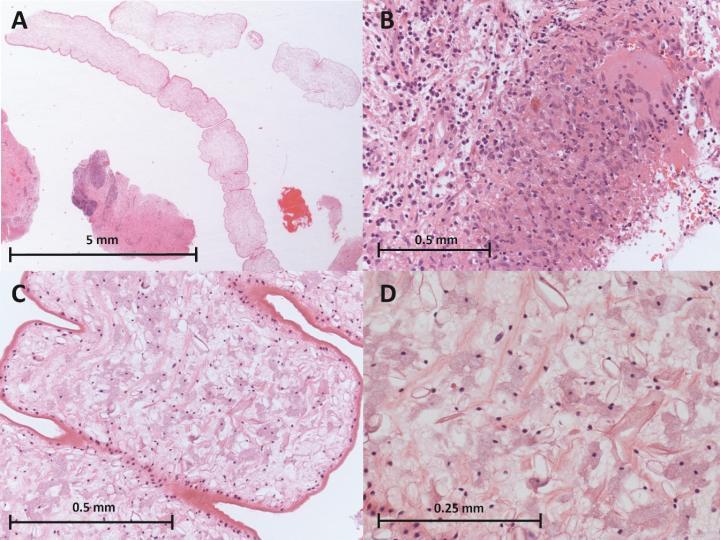
Aagh. Okay, the pure terror is over, and now the science begins. The researchers sent the worm to Wellcome Trust Sanger Institute to have its DNA sequenced and discovered it was a Spirometra erinaceieuropaei, a rare worm found in parts of Asia that can infect humans from eating undercooked frogs and snakes, using frog meat to treat wounds and ingesting contaminated water. Three things you’ll now strenuously avoid for the rest of your life.
The worm’s DNA was fully sequenced successfully, the first time for this species, and the result show it has the largest reported genome for any flatworm.
“This infection is so rare worldwide and completely unexpected in this country that the patient was not diagnosed with sparganosis until the worm was pulled out from the brain. We were also surprised at how large the genome was, it is much bigger than those of other known flatworms, and roughly a third of the size of the human genome. By comparing the genome to other tapeworms we can see that certain gene families are expanded — these possibly underpin this worm’s success in a large variety of host species. The data gave us a first look at a whole group of tapeworms that have not been sequenced before,” said Hayley Bennett from the Wellcome Trust Sanger Institute, lead author of a paper on the worm.
The researchers found genes in the worm that reveal information about the tapeworm’s resistances and susceptibility to certain drugs used to treat tapeworms. They also discovered that the worm might be vulnerable to common cancer drugs. The genetic information also revealed other data that may help researchers understand how the worms can live in so many hosts.
So one man’s nightmarish experience is medicine’s gain, although I doubt he’d do it again if he had the chance. And we’ve learned an important lesson. If you’re ever in Asia, pass on the frog sashimi.
[Source: BioMed Central]