

A new NES game is coming in 2025 — and we’ve played it! Hazard: Let Us Out is currently midway through its Kickstarter crowdfunding campaign, where both physical NES carts and digital files are up for sale. The copy I was given for review should be pretty close to the final product, minus a couple of bugs.

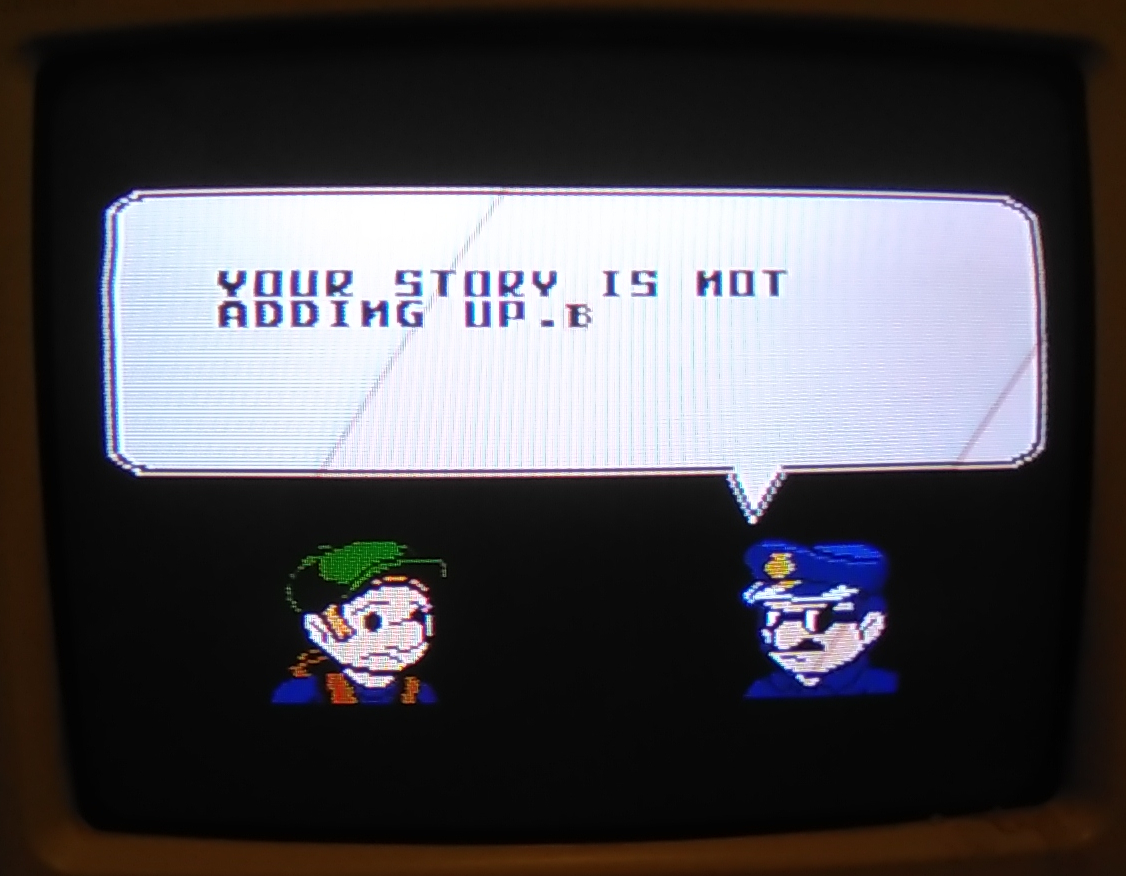
You play the nameless new employee of a robot factory. On his first day, something goes wrong and the robots become sentient and evil at the same time. Everyone at the factory is now the prisoner of the robots, unless you can find a way to escape (and possibly take the other employees with you). This all happened in the recent past, actually — there’s a framing device of the main character telling the game’s story to a policeman, where he’s being held at the station due to the events of the previous hours.
I played my review copy properly, on a real NES hooked up to a CRT television. Zero latency, baby! It’s worth noting that choosing to play on a CRT will crop some of the top HUD information off. Some NES homebrewers design their games so this doesn’t happen. It’s too late for Hazard, as lowering the HUD would require redesigning every screen in the game — or reducing a lot of the information in it. It’s just something you’ll have to deal with, should you be a traditionalist.
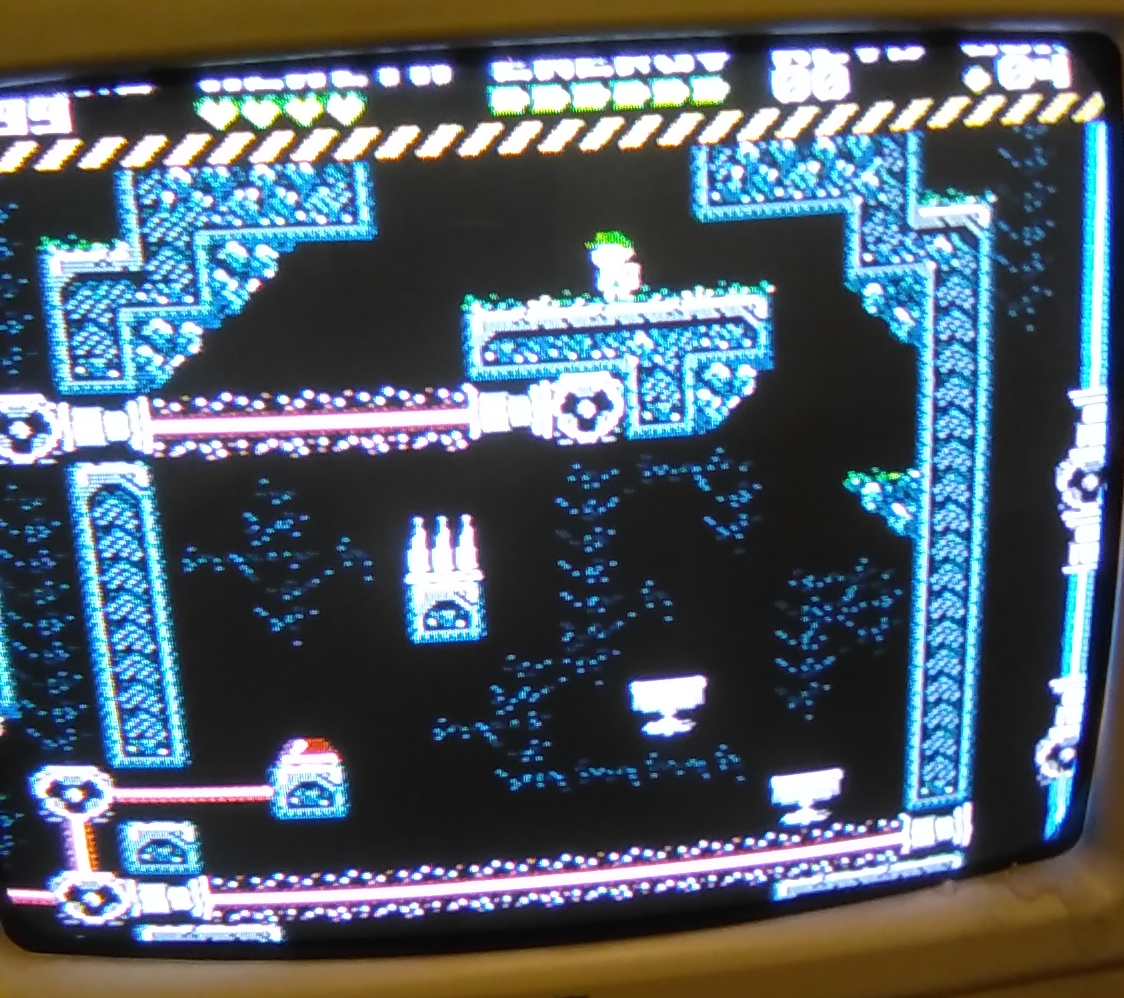
Gameplay in Hazard mostly involves going from room to room on a linear path. The goal in each room is to open the doorway to the next room, which involve varied requirements like defeating all the enemies, pushing a switch, or obtaining a key. There is a major shift in the middle where you fall into a cave and getting out is more of a pure platforming experience, but overall you’re trying to escape a factory of deadly robots one room at a time.
Bosses will appear every now and then to mix things up. Designing bosses on the NES is a tricky affair as the tiny sprite limit prevents the monsters from being very big. There were classic cheats like using background tiles and moving said tiles around on a black screen, but Hazard doesn’t do that. Instead it uses the other method of giving the bosses movement patterns that make them tricky to hit or dodge.
But Hazard has some twists unseen in any other NES game. Periodically you’ll run into teams of trapped scientists and must decide whether or not to rescue them. At first this is a matter of preference, but eventually you’ll face choices like rescuing someone or obtaining a health upgrade. The decisions you make in these cutscenes will affect the ending sequence, and what kind of person your character is. Me, I usually play moral choices in games like a complete saint. I rescued them all. Besides, keep in mind this is a story you’re telling a policeman.
Your arsenal of weapons is upgraded throughout your journey as you stumble upon one unfinished experiment after another. At first all you can do is dodge, but before long you’ll get something that serves the function of a sword and, shortly after that, the ability to shoot bullets. Later on you unlock missiles, which not only dispatch enemies quicker but remove obstacles in your way…and eventually you get a ricocheting projectile that lets you tackle things that would be out of the way otherwise. All these weapons are on a timed meter and have to be recharged between uses — and if your charge is low, you’re back to using the sword.
The NES era of games has a reputation for being incredibly, unfairly hard, and a lot of homebrews keep this difficulty intact, whether through misguided nostalgia or masochistic love of brutality. Hazard does not — I never felt the game was being unfair or pulling something cheap. Advancement depends on skill, not memorization of where to dodge one-hit-kill enemies in a tenth of a second. Checkpoints are for the most part generous, and dying will not set you back very far. My review copy was perma-filled at 99 guys, so I don’t know what the 1-up situation will be, but from my perspective, it’s not a hard game.
Then again, I never tried the One Man Mode option from the title screen — the mode that sets your lives to 1 and resets the whole game if you lose that life. If you WANT a brutally hard experience for some reason, the option is there.
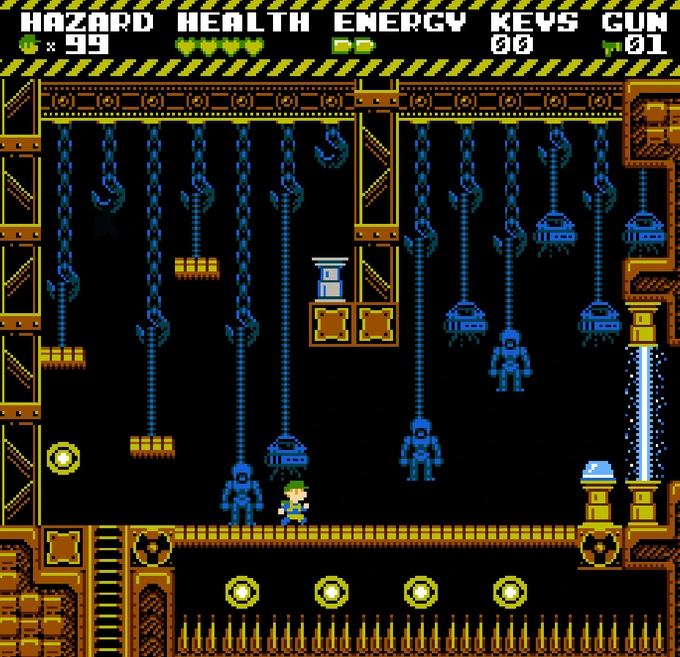
Hazard consists of over 200 screens, but you won’t be staying in most of them for longer than 30 seconds. That makes for a short game, but that’s not a knock on it. Five years of work went into Hazard and, speaking as another NES hobbyist with experience wrestling the NESMaker engine, I can tell. There’s a lot here the native engine doesn’t support, like moving platforms, ricocheting objects and custom enemy AI. It all adds up to an entertaining experience that’s worth your time. Digital copies of Hazard are currently a $12 pledge. physical carts are a $60 pledge and the Collector’s Edition is $95. The campaign will be open until January 9.


2 replies
Loading new replies...
Member
Mushroom Kingdom Expert
Join the full discussion at the PopGeeks.com Forum | Indie Games, Movies, TV & Comics →