
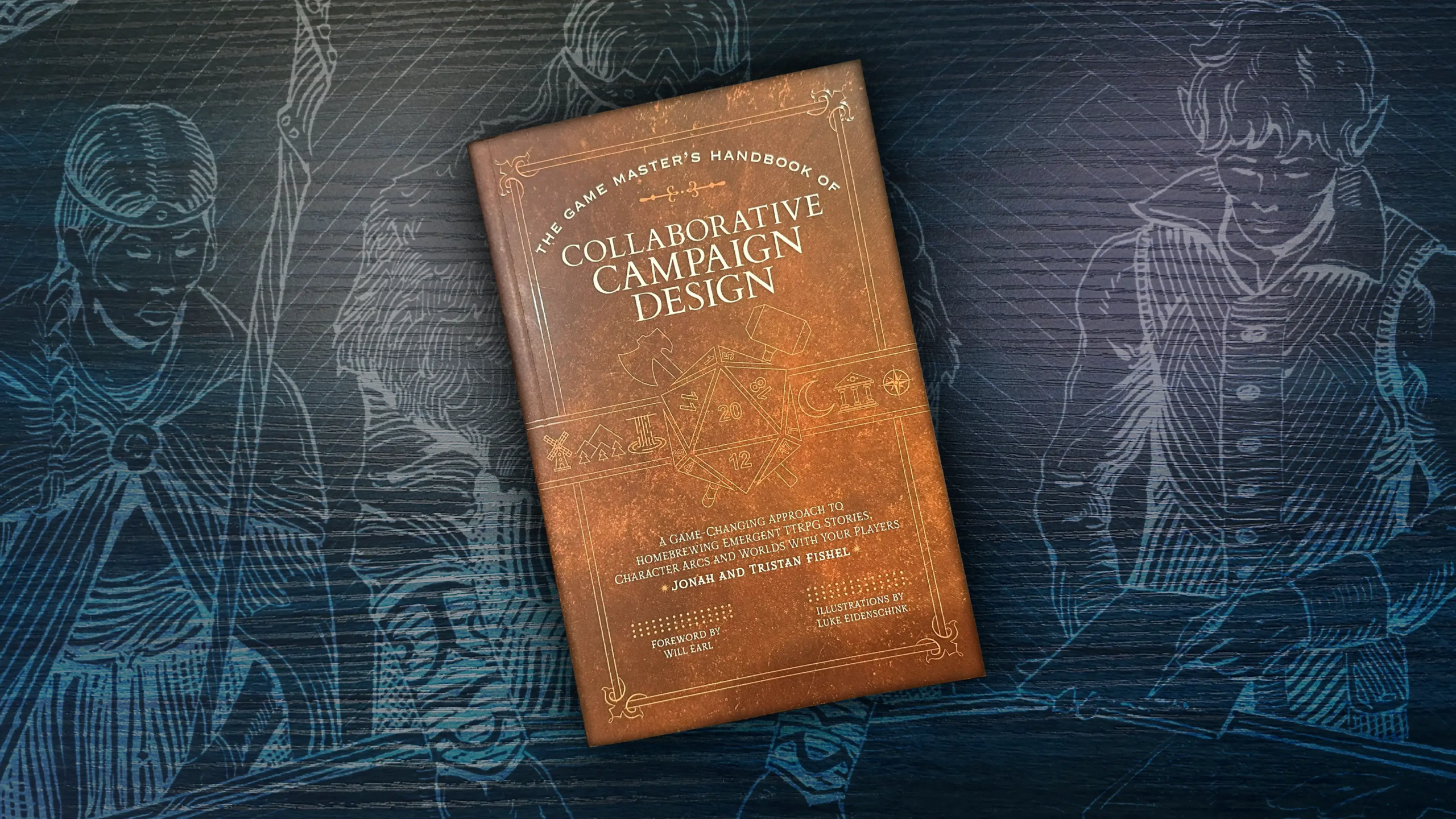
Media Lab Books expands its Game Master’s Handbook line with The Game Master’s Handbook of Collaborative Campaign Design, a resource designed to reframe how campaigns are built and sustained. Written by Jonah and Tristan Fishel, the book introduces a structured but flexible method of “emergent campaign design,” where game masters and players share responsibility for worldbuilding, story arcs, and narrative tone.
The goal is simple but ambitious: shift tabletop role-playing from being GM-driven to being a collaborative exercise, giving players meaningful input at the foundation of a campaign. Rather than dictating story beats, GMs are encouraged to discover outcomes alongside their tables, turning long-term campaigns into shared stories instead of prewritten narratives.
A New Framework for Campaign Planning
The handbook outlines a process that begins even before Session Zero. A “Session −1” framework provides tools for groups to establish tone, setting, factions, and givens before characters are rolled. This early collaborative stage helps prevent players from creating characters who won’t fit into the world or narrative, while also encouraging buy-in that keeps campaigns alive through long arcs.
The Fishels emphasize adaptability: while the methods are system-agnostic, advice is offered for tailoring campaigns to specific rulesets. Narrative arcs, GM notes, and checklists aim to guide tables toward organic story development rather than rigid scripting. By focusing on emergent play, the book highlights what makes tabletop RPGs unique compared to video games or scripted media, the capacity for surprise shared equally by players and GMs.

Related: Why Kyle Thomas’ Division 7 Campaign on Tabletop Bob Is a Must-Watch for D&D Fans
Tools for Engagement and Longevity
The Handbook dedicates space to practical resources, from lists of worldbuilding prompts to integration strategies for existing adventures. Campaigns are broken into phases: starting, running, and concluding, mirroring traditional story structure with inciting incidents, rising action, and climaxes.
This structure allows GMs to weave character arcs and faction conflicts into larger narratives without predetermining outcomes. Instead of railroading players through encounters, the book stresses proactive roleplay and collaborative improvisation. The result is a framework that not only reduces the prep burden for GMs but also extends campaign longevity by keeping every participant invested.
Audience and Limitations
While approachable, the handbook assumes some familiarity with tabletop RPGs. It is not a guide to basic mechanics, nor is it a manual for running combat-heavy encounters. Instead, its focus is narrative: worldbuilding, pacing, and character-driven arcs. For new players, it may feel dense, but for groups eager to deepen collaboration or experienced GMs seeking fresh approaches, the techniques offer immediate utility.
The prose leans more instructional than entertaining, prioritizing clarity over flash. That choice may make the book less suited as a casual read, but it reinforces the authors’ goal of delivering a toolkit rather than a supplement of random tables or character options.
Final Impressions
The Game Master’s Handbook of Collaborative Campaign Design succeeds as both a reference and a philosophy of play. By reframing campaign creation as a collaborative act, the book encourages GMs and players to view themselves as co-authors of long-form storytelling. It provides a path toward campaigns that are more immersive, emotionally resonant, and sustainable.
For those seeking to escape repetitive, GM-centered planning, this handbook offers both theory and practice to guide the transition. It is not a book of monsters, traps, or crunchy mechanics, but one of structure, conversation, and shared narrative control. For many groups, that shift could mean the difference between campaigns that fizzle out and campaigns remembered for years.
Media Lab Books is a New York–based publisher known for accessible, visually engaging titles across popular culture, history, and gaming. Their Game Master’s Handbook line has developed a reputation for practical, system-agnostic guides aimed at improving both storytelling and play.
The Game Master’s Handbook of Collaborative Campaign Design will arrive in bookstores and online retailers October 7, for $14.99. Visit Media Labs Books to pick your closest or favorite one.
Next: Gamemaster’s Deck of Wild Magic and Mischief Review: Chaos, Creativity, and Card-Based Mayhem
Key Takeaways
- Written by Jonah and Tristan Fishel, published by Media Lab Books.
- Introduces “emergent campaign design,” a collaborative approach to TTRPG campaigns.
- Includes a Session −1 worldbuilding system for early group buy-in.
- Focuses on narrative arcs, factions, and player-driven goals over crunchy mechanics.
- Structured in three phases: starting, running, and concluding campaigns.
- Aimed at experienced GMs and groups looking for collaborative storytelling methods.
- On sale October 7, 2025, in paperback format


5 replies
Loading new replies...
Membery
New Member
Member
New Member
Larping is a contact sports!
Join the full discussion at the PopGeeks.com Forum | Indie Games, Movies, TV & Comics →