ION Heart Review: A Story-Driven Solo Mech TTRPG Adventure

PopGeeks

Administrator
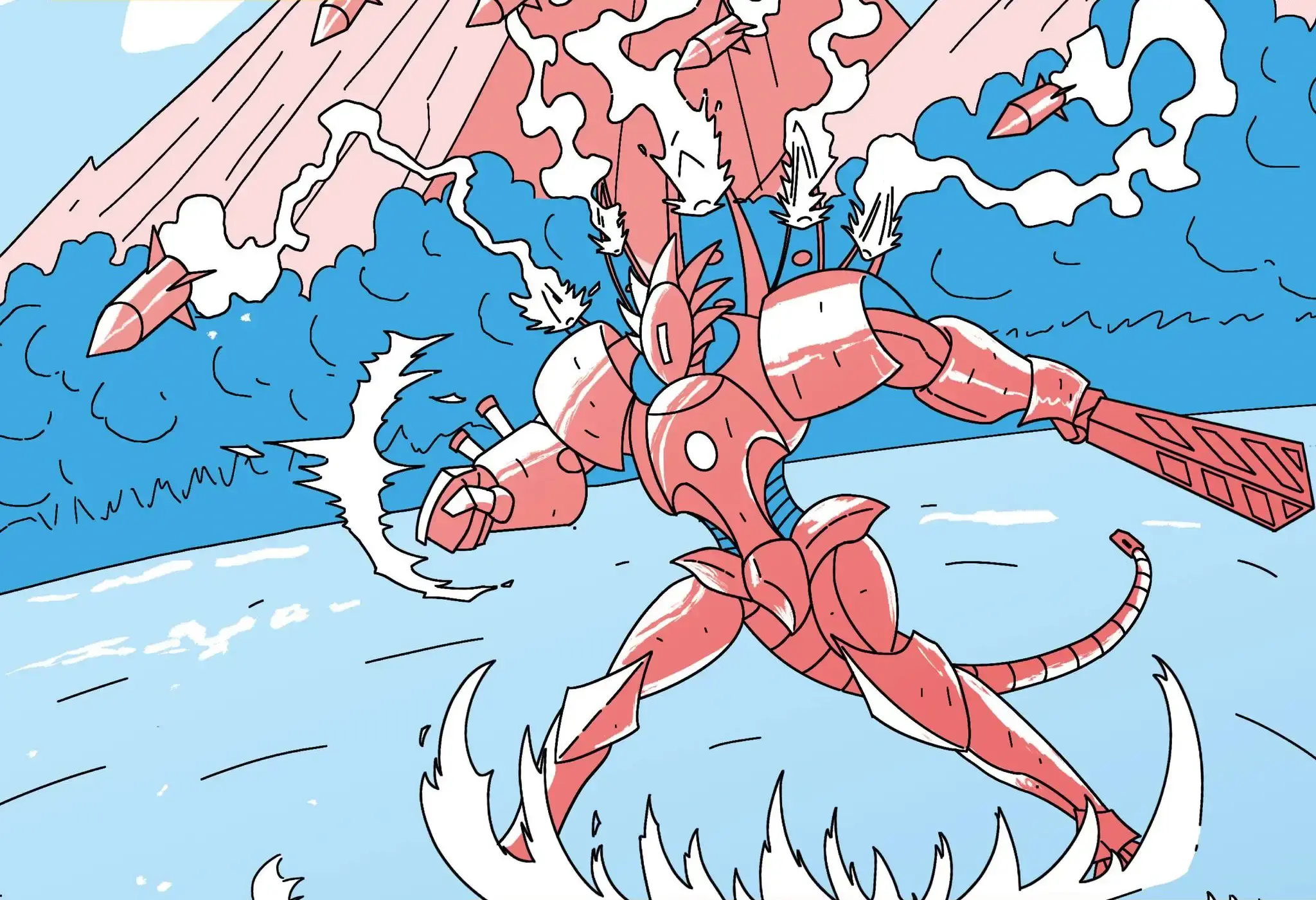
Parable Games’ ION Heart offers a refreshing take on the mech genre, shifting the focus from war to peace in a post-conflict universe. Reviewed by Steve Kellams and Christina Stiso of Epic Adventure Podcast, the game stands out for its simple rules, evocative art, and focus on journaling rather than combat. Players take the role of both a mech and its pilot, navigating a galaxy where the scars of war remain but new opportunities for discovery and connection emerge. Both reviewers praised the book’s style, noting its layout and artwork. With only fifteen pages of history written in concise bullet points, ION Heart quickly sets the stage without overwhelming the reader. The rules themselves are so minimal they could almost fit into a paragraph, allowing players to dive straight into journaling scenarios. The whimsical, childlike artwork, rich in blues and pinks, reinforces the sense of wonder and makes the universe feel approachable. Simple Mechanics, Evocative Play At its heart, ION Heart is a journaling game. Players set up scenarios, roll six-sided dice, and record the outcomes in narrative form. Christina found this approach especially appealing, as journaling has long been one of her preferred solo play styles. Steve also highlighted […]
Read original article here:
 
Last edited by a moderator:
The idea of a journaling-focused mech game feels refreshing. I like that ION Heart invites the player to slow down and think about relationships, memory, and quiet exploration instead of battles. The art style described as playful and colorful also appeals to me. I can see how it creates a mood of discovery rather than destruction. My only concern is the limited number of prompts. With just 18, I feel I could run through them quickly. Still, for someone like me who wants to experiment with solo play without heavy rules, it looks like a strong entry point.
 
Guys, I like that this game treats the mech as more than a machine. The mech becomes a character to interact with and grow alongside. When I read about the “mech circus” scenario, it made me smile. That is the kind of world-building I want in games. I write journals in real life, so I see the appeal of combining that habit with role-playing. The minimal rules also seem great for avoiding distractions. I would prefer more content in the core book, but I can already imagine creating my own prompts.
 
For me, the strength of ION Heart lies in accessibility. I sometimes struggle with large rulebooks. Here, the rules fit into almost one paragraph, which feels liberating. I like the bullet point history too. Instead of learning an encyclopedia of lore, I would rather have a short background that leaves space for my imagination. I do think the game could benefit from expansions sooner rather than later, but even in its small form, it seems like a great starter kit for solo RPGs.
 
I see this game as a tool for mindfulness. Journaling in a science fiction setting, especially after war, lets the player process themes of healing and peace. The art, being childlike, connects with that sense of gentle recovery. I think the game is not just entertainment, but also a way to reflect on inner thoughts. The short adventures are not a problem for me. I prefer quality over quantity, and with slower journaling, even 18 prompts could last me months.
 
I’m cautious about games with too little structure. While the reviewers loved the simplicity, I sometimes need more mechanics to guide my play. If prompts are limited, I might lose interest fast. On the other hand, the possibility of combining this with systems like Radiance Odd Fish sounds promising. That kind of flexibility is rare in RPGs, and it convinces me the system is expandable. I think I would try it only if I had other systems to support it.
 
I have always seen mechs as weapons, so the idea of mechs as companions surprises me. It changes the genre into something softer and more emotional. I think younger players or new RPG fans will enjoy this more than veterans who expect combat-heavy experiences. For me, this game looks like a breath of fresh air, even if short. It may not be my main system, but I would keep it on my shelf for times when I want calm and thoughtful play.
 
Without combat to dictate the flow, it relies on creativity. I enjoy the thought of rolling dice for quirks and outcomes, then writing my pilot’s perspective. It feels almost like co-authoring a small novel with random chance guiding me. Yes, 18 adventures might seem short, but the variety of personal interpretations could make each run unique. For me, replay value exists in how much effort the player invests in their writing.
 
I find myself interested in the aesthetics most of all. The colors, blues and pinks, give a sense of softness that matches the theme of post-war peace. Many mech settings are grey and mechanical, so this artistic choice feels brave. I could see myself buying the book just for inspiration. The journaling angle does not fully attract me, but the design, layout, and tone show that tabletop RPGs can be more than grim battles.
 
I think this game is ideal for players who like control over pacing. With so few rules, nothing stops you from making the adventure last longer. Unlike structured campaigns, here the player decides when to pause, when to continue, and how much detail to include. That flexibility is rare in RPGs, and I value it. I would still want expansions to avoid repeating prompts, but I think the core concept is solid and worth exploring.
 

how to help support popgeeks, popgeeks, pop geeks

Latest News & Videos

Latest News

Back
Top