

The Testaments: Why This New Chapter of Gilead Feels More Real Than Ever

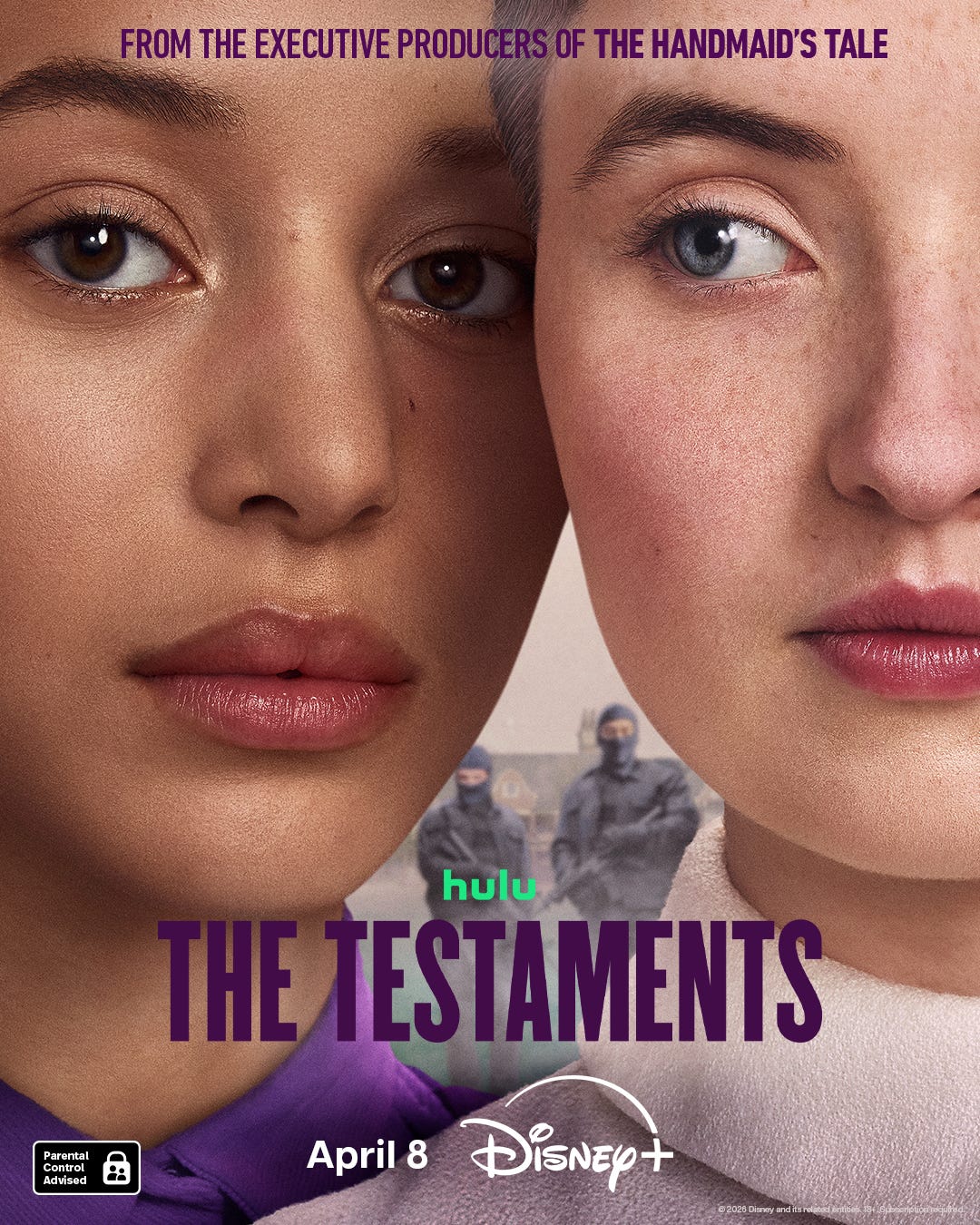

Some dystopian stories feel distant from our lives. Others hit a little too close to home.
That’s exactly why The Testaments, the highly anticipated sequel to The Handmaid’s Tale, already feels so powerful before it even premieres.
When The Testaments arrives on April 8 on Hulu and Disney+, we will return to the chilling world of Gilead, but this time through the eyes of teenage girls who grew up inside the regime.
And that change in perspective makes all the difference.
Because while the original story followed women who remembered freedom, The Testaments focuses on a generation that never knew it.
As a result, the series asks a haunting question: What happens when girls are raised to believe oppression is normal?
Explores a Generation Raised Inside Gilead
At the center of The Testaments is Agnes Jemima, portrayed by Chase Infiniti. She is a thoughtful teenage girl growing up in Gilead’s rigid social structure. Her plum-colored dress marks her as part of the elite class of girls destined to become Wives, married to powerful Commanders and expected to uphold the values of the regime.
From the outside, Agnes seems like the perfect believer.
However, viewers who followed The Handmaid’s Tale know something she does not.
Agnes is actually Hannah Bankole, the daughter of June Osborne, the fiercely rebellious Handmaid played by Elisabeth Moss.
This connection gives The Testaments its emotional heart. Agnes has been raised with propaganda, discipline, and strict religious teachings. Yet somewhere within her is the legacy of a mother who fought Gilead with everything she had.
Sooner or later, that legacy may begin to surface.
The Outsider Who Challenges Everything


Then Daisy enters the story, and suddenly the carefully controlled world of Gilead starts to shift.
Daisy, played by Lucy Halliday, comes from Canada. Immediately, that makes her different. She doesn’t instinctively follow the same social rules as the other girls. She questions things. She pushes boundaries.
In a society built on obedience, curiosity becomes a dangerous trait.
Yet Daisy’s presence in The Testaments carries an even deeper secret. She is actually Nicole, the younger daughter of June Osborne, and she arrives with ties to the underground resistance known as Mayday.
Through Daisy, The Testaments introduces a fascinating contrast. Agnes represents someone raised inside the system, while Daisy represents someone who can see the system clearly.
When these two young women form a bond, they begin to challenge the story Gilead has told them all their lives.
Aunt Lydia Returns, And She Knows Every Secret


No story set in Gilead would feel complete without one of its most complicated figures: Aunt Lydia.
Once again portrayed by Ann Dowd, Aunt Lydia returns in The Testaments as the authority figure overseeing the elite academy where young girls learn their “proper roles.”
For years, Lydia enforced Gilead’s harsh rules with frightening dedication. She trained Handmaids, punished dissent, and constantly reminded women that obedience was their sacred duty.
However, The Testaments hints that Lydia may be far more complex than she first appeared.
After all, she helped build the system. She understands it better than anyone else.
And sometimes the people who know a system best are the ones who recognize its weaknesses.
Why The Testaments Feels Uncomfortably Close to Reality
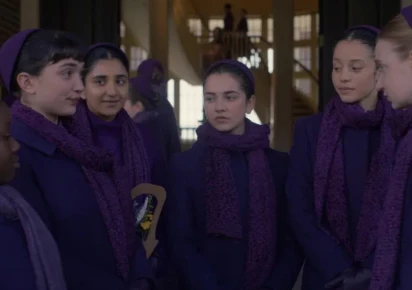

One reason The Testaments resonates so deeply is that the world of Gilead never feels completely fictional.
In Gilead, women lose their right to education. They lose control over their careers and their bodies. They must follow strict clothing rules and accept a social hierarchy built entirely around male authority.
When we watch The Testaments, many of us cannot ignore the parallels with real events happening right now.
In Afghanistan, girls have been banned from attending secondary schools and universities. Women face increasing restrictions on work, travel, and public life.
Meanwhile, in Iran, women have protested mandatory dress laws and fought for the right to choose how they live and express themselves. Many have faced arrest or violence simply for demanding basic freedoms.
These realities remind us that the themes explored in The Testaments are not distant science fiction. Instead, they echo struggles that women continue to face across the globe.
Margaret Atwood once famously said she only included things in her stories that had already happened somewhere in history.
That truth is exactly what makes The Testaments feel so unsettling, and so important.
The Testaments Is Ultimately About Girls Finding Their Power
In the end, The Testaments is not just about a brutal regime. It is about the moment when young women begin to question the world they inherited.
Agnes and Daisy represent two sides of the same story: one raised inside Gilead, the other raised outside it. Yet together, they begin to see the system for what it truly is.
And once that realization happens, silence becomes impossible.
The most powerful idea behind The Testaments is also the simplest: systems built on control often fear one thing above all else, young women who refuse to accept the rules.
When The Testaments premieres this April, we will once again enter the world of Gilead.
But this time, the daughters are watching.
And they may be ready to change everything.

10 replies
Loading new replies...
Member
AMAWEMEN Hear me roar!
Take a look at me now
Member
New Member
New Member
New Member
Hey I just met you!
I feel like Whoa
Join the full discussion at the PopGeeks.com Forum | Indie Games, Movies, TV & Comics →